As an Amazon Associate, we earn from qualifying purchases. Some links on this site are affiliate links at no extra cost to you. Our recommendations are based on thorough research and editorial judgment.

LED Color Consistency: Binning, Matching, and Replacements

LED color consistency is essential for creating uniform experiences across various applications, such as retail displays and architectural lighting. Effective binning, which sorts LEDs based on performance like color temperature, reduces variations and guarantees reliable matching. Additionally, understanding the MacAdam Ellipse and SDCM standards helps maintain minimal color discrepancies. Addressing challenges such as aging and calibration can prevent mismatches, while embracing modern technologies and best practices facilitates effective replacements. There’s much more to reflect on for ideal outcomes.
Key Takeaways
- LED binning categorizes products based on color temperature and brightness, ensuring consistent color output across applications.
- SDCM standards help measure color variations, aiming for 3 SDCM or less for optimal consistency.
- Color consistency is crucial during replacements, as aging LEDs may mismatch when replacing individual components.
- Implementing technological solutions and innovations in automated testing enhances accuracy in LED color matching.
- Collaborating with reputable manufacturers reduces color consistency issues and complies with industry standards like ANSI C78.377-2015.
Understanding LED Color Consistency
How does one guarantee consistent color output in LED lighting? Achieving LED color consistency is essential for maintaining the visual experience across different applications. Measurement systems like the Standard Deviation of Color Matching (SDCM) assist in quantifying color variations, with tolerances of +/-75K for warm white and +/-150K for cool white considered acceptable. LEDs must consistently perform at specified color temperatures, as even small discrepancies are noticeable to the human eye. To minimize such differences, manufacturers employ LED binning, a practice that categorizes LEDs based on performance characteristics like color temperature and brightness. This approach guarantees uniformity in diverse settings, from retail displays to architectural installations, where precise color matching is a must-have for aesthetic integrity and professionalism. Additionally, energy-efficient options like those found in LED filament bulbs contribute to overall lighting quality with consistent color output.
The Importance of LED Binning
Binning plays an essential role in the LED manufacturing process, serving as the foundation for achieving precise color consistency across various applications. LED binning involves sorting based on critical performance parameters, including color temperature and brightness, to minimize natural variations. Tighter binning criteria, informed by MacAdam ellipses, result in fewer color discrepancies, which is vital in retail displays and architectural lighting. Without proper binning, variations in LED characteristics can create noticeable differences in brightness and color, undermining visual aesthetics. Innovations in automated testing are enhancing the accuracy of LED binning while addressing increased production costs. Ultimately, achieving consistent color output allows designers to deliver visually appealing and professional LED lighting solutions that meet industry standards and performance expectations.
Recommended Products

⭐ DIMMABLE BR30 LED FLOOD LIGHT BULB, 10%-100%. These BR30 LED flood light bulbs dim smoothly from 10% to 100% with compatible dimmers, giving precise control over light intensity for any room or application. Instant-on technology means no warm-up delay, and flicker-free output keeps light consistent throughout the dimming range. A direct dimmable replacement for 65-watt incandescent BR30 flood light bulbs in 5-inch and 6-inch recessed cans, track lighting, and wide-coverage indoor flood light applications. E26 medium base fits standard sockets with no adapter required. Compatible with standard leading-edge and trailing-edge dimmers.
⭐ DIMMABLE BR30 LED FLOOD LIGHT BULB, 10%-100%. These BR30 LED flood light bulbs dim smoothly from 10% to 100% with compatible dimmers, giving precise control over light intensity for any room or application. Instant-on technology means no warm-up delay, and flicker-free output keeps light consistent throughout the dimming range. A direct dimmable replacement for 65-watt incandescent BR30 flood light bulbs in 5-inch and 6-inch recessed cans, track lighting, and wide-coverage indoor flood light applications. E26 medium base fits standard sockets with no adapter required. Compatible with standard leading-edge and trailing-edge dimmers.
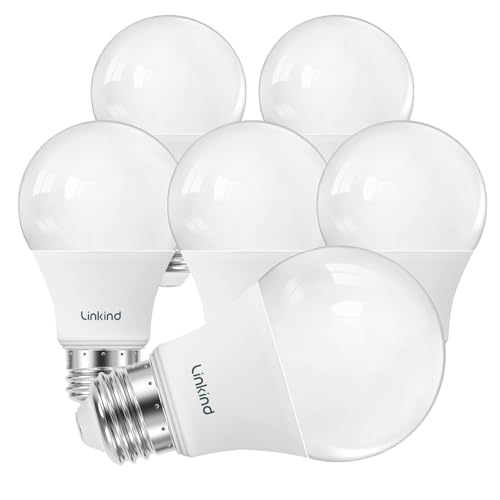
✔ 2700K WARM YELLOWISH LIGHT: The A19 dimmable LED light bulbs give off 800 lumens of 2700k cozy color light. Easy installation with the standard medium screw base E26. NOTE: Please confirm the Kelvin (K) value. This is the most accurate way to select your desired light color. This bulb is 2700K light, which produces a WARM YELLOWISH light. It is not a Bright White or Daylight White bulb. If you prefer a whiter light, please consider our 4000k Cool White or 5000K Daylight options.
MacAdam Ellipse and SDCM Explained
Achieving color consistency in LED lighting requires a clear understanding of the MacAdam Ellipse and SDCM, which are fundamental concepts in evaluating color variation. The MacAdam Ellipse visually represents color differences perceived by the human eye, categorizing them based on SDCM, or Standard Deviation of Color Matching. Areas within a 1 SDCM ellipse appear nearly identical, promoting visual uniformity in crucial lighting applications. A higher SDCM value indicates increased color variation, jeopardizing color accuracy essential for retail or artistic displays. For peak performance of LED products, aiming for 3 SDCM or less is recommended. By comprehending the relationship between MacAdam Ellipses and SDCM, lighting manufacturers can enhance product consistency, ultimately improving customer satisfaction. Additionally, incorporating energy-efficient LED bulbs is vital as they offer both longevity and consistent color performance.
Recommended Products

TINY YET POWERFUL - Fantastic lights super bright in a small package. Utilizing 10W high intensity CREE LEDs, AKD Part Flush Mount Combo LED Pods deliver 40W (2* 2pcs* 10W) Brightness and 4,000 Lumens. 6,000K light output was carefully chosen to be a perfect range of light to providing powerful LED technology to light up your driving way.
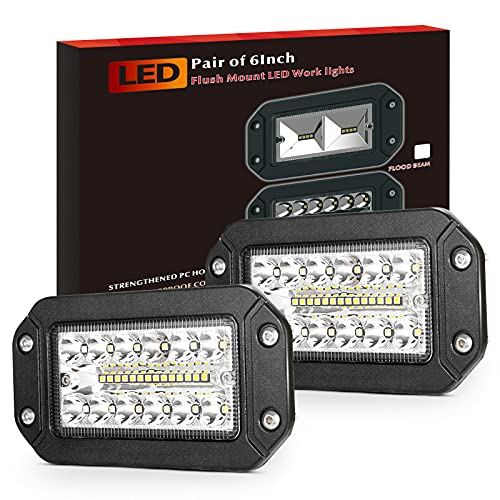
WIDER & LONGER ILLUMINATION DISTANCE: Centered 170 ° flood LEDs surrounded by dual row 30 ° spot diodes will offers a perfect focused light with large-angle flood beam around to achieve wider and longer illumination distance with intensive brightness
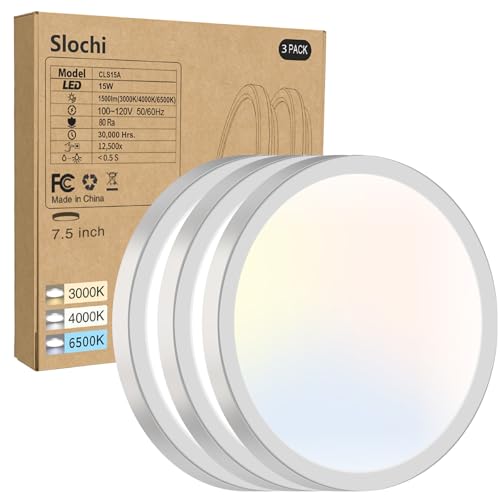
【Ultra Thin Design - Fits Perfectly to Ceilings】Our led ceiling light flush mount are only 0.94 inches thick, perfect for rooms with low ceilings. The simple and modern rounded design blends perfectly with any interior style and is perfect for bathrooms, hallways, bedrooms, closet, children's rooms, porch, etc
Challenges of Color Consistency in Lighting
While the quest for consistent color in LED lighting is vital, numerous challenges can impede achieving this goal. Color consistency issues often stem from chromaticity bin selection and variations in calibration across batches, yielding visible differences in light output. The human eye, sensitive to color variations, can find these inconsistencies distracting, particularly in retail and architectural environments. Additionally, replacing individual LEDs or strips can lead to color mismatches due to aging, emphasizing the need to source replacements from the same product family. Adhering to standards like ANSI C78.377-2015 is important, as it limits color variation and guarantees products stay within an allowable SDCM range of typically 3 or 5, enhancing overall performance and uniformity in LED lighting applications. Furthermore, selecting energy-efficient options when buying LED fixtures can help ensure better color consistency and longevity.
Recommended Products

3CCT Selectable Color Temperature: Select your preferred color temperature via the toggle switch on the fixture before mounting. Three preset tones are available: 3000K Bright White, 4000K Cool White, and 5000K Daylight. This fixture requires hardwiring to a standard ceiling J-Box (sold separately). Once installed, it works only with a regular ON/OFF wall switch for basic on/off control. Recommended for flat ceilings with pre-installed junction boxes.

【Ultra Thin Design - Fits Perfectly to Ceilings】Our led ceiling light flush mount are only 0.94 inches thick, perfect for rooms with low ceilings. The simple and modern rounded design blends perfectly with any interior style and is perfect for bathrooms, hallways, bedrooms, closet, children's rooms, porch, etc
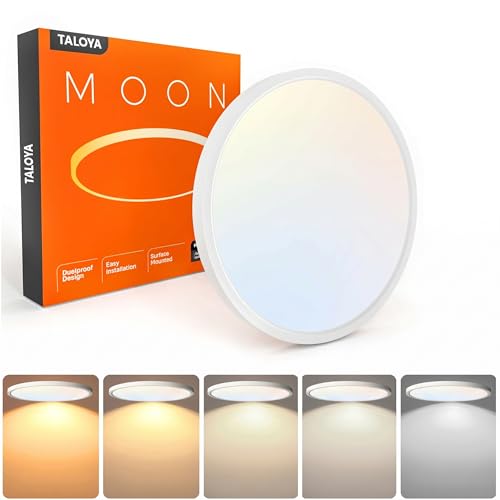
Why Taloya?【Advantage 1- The most convenient installation】: Spare three minutes to log into Youtube, and input “Taloya Ceiling Light-C2” in the search to watch the whole easy installation video. DIY friendly.【Warm Tips】: This product only works with regular ON/OFF wall switch as shown in the advertised pictures.
Technological Solutions for Color Matching
The challenges of color consistency in LED lighting have inspired significant innovations that enhance how professionals approach the problem. Technological advancements, such as Xicato’s algorithms for remote phosphors, have improved LED performance by addressing the inherent differences in chip characteristics. Utilizing tunable fixtures allows for the adjustment of color temperature, facilitating customized light outputs that enhance visual quality and consistency. This capability streamlines the color matching process, reducing the necessity for extensive mock-ups. Adhering to SDCM standards guarantees that color variations remain within acceptable limits, addressing both standard and demanding applications. Collaborating with reputable manufacturers and conducting rigorous product testing are also essential strategies that minimize issues related to color consistency across various LED sources. Moreover, integrating energy-efficient LED options not only improves color accuracy but also optimizes overall lighting performance.
Recommended Products

<p>【E26 Base | 6W LED Filament Bulb – 800 Lumens】: The ST64 smart bulb features a standard E26 base for easy installation. With just 6W of power, it delivers 800 lumens of brightness—equivalent to a traditional 60W incandescent bulb. Crafted from high-quality glass, it stays cool to the touch even after long use, ensuring safety for homes with children or pets. Ideal for table lamps, floor lamps, and pendant lights. Rated for 20,000 hours of use.</p>

5 COLOR TUNABLE - Not sure which color A19 LED bulb is perfect for your lamps or home? Enhance your lighting experience with our LED light bulbs, equipped with a 5-color temperature switch. Choose from 2700K (warm white), 3000K (soft white), 3500K (natural white), 4000K (cool white), and 5000K (bright white) to easily customize your atmosphere. Whether you’re seeking coziness, balance, or a modern bright light, this bulb adapts to your specific needs.

[Adjustable 3cct Pendant Lights]: Pendant Light Fixtures color temperature can be adjusted 3000K 4000K, and 6000K.You can also use the control button to quickly switch the light color (cool white light, neutral light, and warm white light).
Best Practices for Ensuring Consistent Replacements
Ensuring consistent replacements in LED lighting requires careful consideration and informed decision-making, particularly when it comes to matching existing installations. When replacing LEDs, it is essential to select lighting products with the same Standard Deviation of Color Matching (SDCM) rating, ideally within three steps for enhanced color consistency. Testing replacements against current fixtures can verify visual match and consistency before full installation. In addition, choosing LEDs from the same manufacturer and production batch minimizes color mismatches stemming from varied binning practices. Understanding MacAdam Ellipses helps in identifying acceptable color variations, while selecting options within tighter bin ranges further enhances consistency. Moreover, documenting batch information during purchases aids in maintaining uniform performance over time, even during expansions or replacements. Additionally, selecting lighting with low heat output ensures safety and optimal performance during extended use.
Recommended Products

Unprecedented Ultra-thin Ceiling Lights - We've used cutting-edge raw materials renowned for their flexibility and strength to create this incredibly slim round led light, measuring just 0.67 inches thick. This design surpasses the thickness limitations of traditional lights for ceiling. Regardless of your ceiling height, it seamlessly integrates into your home decor, adding a modern and stylish allure

Sleek Modern Design: This contemporary flush mount ceiling light features a low-profile housing that sits neatly against the ceiling, ensuring smooth clearance for closet doors. Its durable metal frame comes in a brushed nickel finish, paired with a white plastic diffuser that evenly distributes bright, shadow-free illumination.
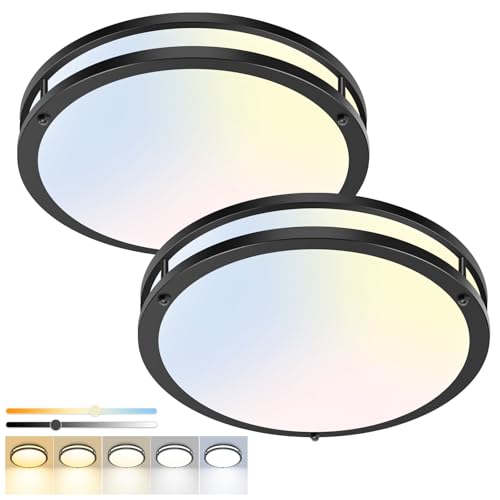
[Newly Upgraded - Ultra-Easy Installation] Unlike most led ceiling lights, our upgraded bedroom light fixture features an integrated design—no need to disassemble parts. What's more, no electrician assistance is required! Simply follow the included step-by-step installation guide, and you can finish the installation in just a few minutes, saving you from the hassle of installation
Frequently Asked Questions
What Is the Lifespan of Color-Binned LEDS?
Color-binned LEDs typically exhibit a lifespan influenced by color degradation factors, aging characteristics, and usage conditions. Environmental impact studies reveal that lumens output and spectral power distribution affect longevity, while humidity effects analysis plays a significant role.
How Does Temperature Affect LED Color Consistency?
A study indicates that over 70% of LEDs experience color shift due to temperature impact. Poor thermal regulation can compromise LED performance, causing color instability during thermal cycling, influenced by environmental factors and inadequate heat dissipation from radiant heat.
Can I Mix Different Bins in One Fixture?
Mixing different bins in one fixture can compromise color uniformity and visual perception. Effective fixture design must consider bin standards and color blending to maintain LED performance and light intensity, ensuring desirable design aesthetics throughout the application.
What Tools Are Used for Measuring Color Consistency?
Color measurement tools include spectrophotometers for calibration, LED testing equipment for accurate readings, and lighting design software for analysis. Color matching techniques and chromaticity diagram analysis help guarantee adherence to color consistency standards and color fidelity assessment.
How Do Manufacturers Ensure Bin Accuracy?
Manufacturers guarantee bin accuracy through rigorous quality control procedures, employing color measurement standards and photometric evaluation techniques. Approximately 85% utilize spectral distribution analysis and optical performance testing, integrating bin classification methods and color grading systems into LED manufacturing processes.