As an Amazon Associate, we earn from qualifying purchases. Some links on this site are affiliate links at no extra cost to you. Our recommendations are based on thorough research and editorial judgment.

Glare and Hotspots: Shades, Diffusers, and Aiming Fixes

Effective glare management hinges on the strategic use of shades and diffusers, paired with proper fixture aiming. Shades, made from soft fabrics or frosted glass, block direct light and reduce discomfort glare. Diffusers scatter light, creating even illumination and minimizing harsh brightness. Properly aiming fixtures away from direct sightlines prevents glare and shadows. For best comfort, assess reflective surfaces and fixture placement. Employing these methods leads to visually pleasing spaces and enhances user experience. Continue for more insights on enhancing lighting design.
Key Takeaways
- Utilize shades to block direct light sources and reduce discomfort glare in living spaces.
- Implement diffusers to scatter light and soften illumination, ensuring even brightness and minimizing hotspots.
- Aim light fixtures away from direct lines of sight to prevent glare and create a softer lighting effect.
- Position fixtures away from reflective surfaces to avoid unintended glare and enhance visual comfort.
- Regularly assess and adjust fixture positions for optimal performance and to maintain balanced lighting environments.
Understanding Glare and Its Impact on Spaces
Glare, often characterized by excessive brightness, greatly impacts the functionality and comfort of indoor spaces. It primarily comes in two forms: discomfort glare, which causes unease, and disability glare, which severely impairs visibility. This phenomenon can lead to considerable safety issues and reduce visual comfort, particularly in environments with highly reflective surfaces or poorly designed lighting fixtures. Effective glare management is essential for any space, as it greatly enhances user experience and minimizes eye strain. To combat glare, one should utilize well-designed lighting fixtures equipped with shielding features, and consider the strategic placement of lights to avoid direct lines of view to bright sources. These measures guarantee a comfortable, productive environment that accommodates both aesthetics and functionality. Additionally, incorporating under cabinet lighting can further reduce shadows and enhance the overall illumination of the space.
The Role of Shades in Glare Management
In many indoor environments, incorporating shades is a must-have strategy for effectively managing glare and enhancing visual comfort. Shades block direct light sources from the line of sight, reducing discomfort glare in living spaces. The design and height of shades greatly influence their effectiveness; taller shades can shield bulbs while allowing for broader light diffusion. Utilizing light-diffusing materials, such as soft fabrics or frosted glass, can further soften illumination and prevent harsh reflections. Additionally, adjustable or tilted shades allow users to alter light direction, minimizing hot spots and achieving more uniform brightness. Integrating shades not only improves visual comfort but also enhances the overall aesthetic appeal by softening harsh lighting contrasts, creating a more inviting atmosphere. Moreover, choosing lamps with a weather resistance rating can also enhance their utility by ensuring they are suitable for various environments.
Recommended Products

Upgrade Yarn-dyed Curtain: Made with advanced techniques, our upgraded fabric offers strong fade resistance for at least 2 years and stays intact even after a month in extreme conditions.

4.7" x 4.7" Thickened Post: Thicker than traditional, enhancing the sturdiness and durability of the gazebo against all kinds of weather.

[Galvanized Steel Double-Tier Roof] This wood gazebo features a double-tier galvanized steel roof designed for superior ventilation and airflow. Its rust-resistant surface blocks up to 90% of UV rays, protecting you from direct sunlight while enhancing durability against strong winds and heavy rain. Perfect for year-round outdoor enjoyment.
How Diffusers Contribute to Visual Comfort
The integration of diffusers in lighting design marks a significant advancement in enhancing visual comfort across various settings. Diffusers scatter and soften light, creating even illumination that effectively controls glare. This reduction in harsh brightness is vital in environments such as offices, educational institutions, and healthcare facilities, where individuals often experience long periods of light exposure. Properly designed diffusers, such as prismatic and opal types, maximize light efficiency while improving the overall atmosphere. By employing materials like frosted polycarbonate or prismatic acrylic, designers can achieve a balanced lumen output that promotes visual comfort. Additionally, placing diffusers close to light sources helps create smoother light distribution, reducing harsh shadows and delivering a more pleasing aesthetic across various applications. Moreover, integrating dimmable lighting options can further enhance user experience by allowing for customizable brightness settings.
Recommended Products

Illuminates up to 500 sq. ft. - Equivalent of up to 1000 watts.

LED: Integrated LED fixture. 3000K, 4000 Lumens, 78 Watts, CRI 90

STURDY Made From Crystal and Iron
Proper Aiming Techniques for Light Fixtures
How can proper aiming techniques for light fixtures transform a space’s illumination effectiveness? By angling light fixtures to reduce direct lines of sight, individuals can greatly minimize glare and enhance visibility. Proper aiming techniques direct light precisely where it’s needed, avoiding harsh shadows and creating a softer light distribution. Utilizing adjustable fixtures further allows for tailored illumination, adapting beam shapes to suit specific tasks or areas. Additionally, implementing layered lighting strategies—such as combining general, task, and accent lighting—provides balanced brightness and reduces glare. Regularly reassessing and adjusting fixture positions guarantees peak performance over time, meeting the evolving needs of decor or room function. Mastering these techniques is essential for achieving a well-lit, inviting environment. Furthermore, selecting fixtures with moisture-proof materials can enhance durability and performance in various settings.
Recommended Products

【Unbeatable Performance】The 2×4 led flat panel lights with edge-lit LEDs are integrated so there are no bulbs to replace; 50/60/70/90W Wattage options, 10000LM high performance surface mount ceiling light fixtures; 110LM/W energy saving, significantly reducing electricity costs compared to traditional fluorescent fixtures. Ideal for eco-conscious lighting solutions in Commercial Areas, Educational and Healthcare Facilities

【Ultra-Efficient LED Technology】130 lm/W high-efficiency LEDs paired with advanced drivers deliver 9360 lumens output.50,000+ hour lifespan achieves 56% energy savings vs fluorescent lighting. Slim 1.97-inch profile fits standard 2x4 grids.

5-Level Wattage Selectable: This energy-efficient 2x4 led flat panel light five adjustable power settings (30W/40W/50W/60W/70W), letting you match brightness to different spaces. At 70W, it delivers up to 7700 lumens of bright, uniform illumination while helping reduce energy consumption
Strategies for Minimizing Hotspots
Minimizing hotspots is essential for achieving a harmonious and comfortable lighting environment, particularly in areas where glare can disrupt focus or enjoyment. Employing diffusers, such as frosted glass or textiles, can effectively scatter light and mitigate bright spots from direct light sources. Additionally, strategic positioning of lights away from reflective surfaces helps enhance glare control by reducing direct visibility. Using anti-glare accessories, like micro-prismatic diffusers, can provide even illumination. Adjusting the angle of fixtures prevents direct rays from striking surfaces or the observer’s line of sight. Furthermore, layering various lighting solutions at different intensities contributes to balanced environments, effectively decreasing the contrast between bright areas and minimizing the impact of hotspots, ensuring a more enjoyable visual experience. To achieve optimal dimming capabilities, consider using recessed lighting options that offer customizable brightness and color temperature adjustments to enhance your space’s ambiance.
Recommended Products

【Ultra-Efficient LED Technology】150 lm/W high-efficiency LEDs paired with advanced drivers deliver 5200 lumens output.50,000+ hour lifespan achieves 56% energy savings vs fluorescent lighting. Slim 1.97-inch profile fits standard 2x2 grids.

Selectable Wattage Options:Easily switch between 30W, 40W, 50W, 60W, and 72W to match your space’s lighting needs. Provides 3750–9000 lumens for bright, efficient illumination, making it perfect for offices, schools, or commercial areas.

Dimensions: Wall-Mount Size: W72*H30*D4-5/8", one cabinet with left opening door and one cabinet with right opening door. This cabinet is compatible with both wall-mount and recess mount options, making it easy to fit in any bathroom space. (Assemble Needed)
Combining Shades and Diffusers for Optimal Results
Integrating shades and diffusers into lighting design proves to be a transformative approach for enhancing both aesthetics and functionality within a space. Combining these elements effectively reduces glare and hotspots by softening direct light and distributing it evenly. Shades can be tailored to block the direct line of sight from light sources, while diffusers scatter and soften light for visual comfort. This coordinated design strategy not only enhances glare control but also guarantees that fixtures appear inviting rather than harsh. Selecting materials, such as frosted glass or soft fabric, is essential in achieving ideal light diffusion. Ultimately, harmonizing shades and diffusers leads to improved visual comfort, decreasing eye strain in both residential and commercial settings. Incorporating energy efficiency ratings ensures that lighting solutions are not only aesthetically pleasing but also cost-effective.
Recommended Products

Architectural Floating-Frame Design — Interlocking rectangular LED forms create a sculptural, contemporary statement ideal for dining rooms, foyers, and modern living spaces.

BODIE PENDANT CEILING LIGHT FIXTURE DIMENSIONS: 11" High (63.5" Max Adjustable Height) x 24.5" Wide; Ceiling Canopy: 5"W x 5"L x 1"H; Weight: 17.5 lbs.
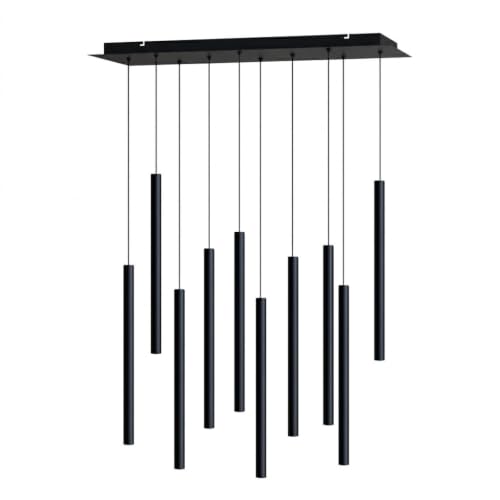
Dimensions These 10 pendant fixtures feature a 10” × 27” rectangular canopy, and each cylindrical pendant measures 1” in diameter × 17.8” in length. The suspension cables are independently adjustable up to 71” in total length, allowing flexible installation for a variety of ceiling heights. Longer cable lengths are available upon request.
Practical Tips for Effective Glare Reduction
Effective glare reduction is a crucial consideration in modern lighting design, influencing both the comfort and functionality of a space. Utilizing diffusers, such as frosted glass or fabric, can effectively scatter light and minimize glare in various environments. Employ shades that block direct views of bright bulbs, greatly reducing eye discomfort. In addition, incorporating dimmer switches allows users to adjust brightness levels according to specific activities, enhancing overall comfort. Anti-glare accessories, like adhesive diffusers, can be retrofitted onto existing fixtures for an easy glare reduction solution. Strategically placing light fixtures to avoid direct lines of sight toward bright sources further helps prevent both direct and reflected glare, creating a more pleasant lighting experience for occupants. Additionally, consider using energy-efficient bulbs that provide greater illumination without the excess glare often associated with higher wattage options.
The Importance of Fixture Placement in Lighting Design
When it comes to lighting design, the placement of fixtures plays a significant role in both aesthetic appeal and functional effectiveness. Proper fixture placement is vital to reduce glare and prevent hotspots. Fixtures should be strategically positioned, as incorrect heights and angles adversely affect light distribution, creating harsh shadows and concentrated areas of brightness. Employing layered lighting techniques using multiple fixtures allows designers to control brightness and contrast, enhancing visual comfort. Adjustable fixtures serve as a must-have; they offer flexibility to reposition lights according to changing room layouts or activities. In addition, evaluating the presence of reflective surfaces is essential; positioning fixtures away from shiny elements minimizes unintended reflections that detract from a cohesive design, delivering an ideal lighting experience. Incorporating dimmable capabilities into your lighting choices can further enhance the ability to create the desired atmosphere in any space.
Evaluating Lighting Solutions to Enhance Comfort
Achieving visual comfort in lighting design is essential for creating inviting and productive spaces. Implementing specialized diffusers, such as prismatic and opal varieties, can efficiently scatter light, minimizing glare and enhancing comfort. Aiming fixtures helps shield light sources from direct line of sight, considerably reducing discomfort glare while improving overall illumination quality. Additionally, incorporating anti-glare accessories retrofits systems to enhance visual comfort without extensive upgrades. Utilizing matte surfaces minimizes harsh reflections, further reducing glare in environments like offices and retail spaces. Furthermore, integrating layered lighting designs provides varied brightness levels, allowing spaces to cater to diverse activities and preferences. By evaluating these lighting solutions, designers can create atmospheres that prioritize comfort and usability for all occupants. Moreover, choosing energy-efficient options enhances not only visual comfort but also sustainability within lighting designs.
Frequently Asked Questions
What Is Recommended to Prevent Issues With Glares, Shadows, and Poor Lighting?
To prevent glare, shadows, and poor lighting, utilizing effective lighting techniques, implementing shadow control strategies, and selecting appropriate surface textures are essential. These elements together enhance visual comfort and maintain a balanced, inviting atmosphere.
What Is an Anti-Glare Diffuser?
Just as an anti-glare screen shields eyes from harsh light, an anti-glare diffuser minimizes light reflections through innovative light diffusion techniques. This accessory evokes a serene ambiance, promoting comfort and productivity in any illuminated space.
What Are the Three Types of Studio Lighting?
The three types of studio lighting—key light, fill light, and backlight—utilize key lighting techniques and strategic studio light placement. Light modifiers comparison helps photographers optimize the interplay among these lights for desired effects and mood.
How to Reduce Glare in a Lightbox?
To reduce glare in a lightbox, one must carefully arrange light placement, select appropriate material choice for diffusers, and consider surface texture. This approach transforms harsh brilliance into a gentle glow, enhancing overall illumination.