As an Amazon Associate, we earn from qualifying purchases. Some links on this site are affiliate links at no extra cost to you. Our recommendations are based on thorough research and editorial judgment.

Accent Lighting for Art: Beam Angles, Offsets, and UV Concerns

Accent lighting for art plays an essential role in showcasing artworks effectively. Utilizing narrow beam angles, preferably less than 20°, emphasizes fine details while guaranteeing high color accuracy. Employing offset techniques, such as positioning lights at a 30° angle, minimizes glare and enhances visibility. Incorporating UV-filtering options protects sensitive pieces from damage. Following best practices guarantees balanced and engaging displays. Understanding these elements is vital for creating inviting gallery spaces that elevate the viewer’s experience, leading to greater insight on your artistry.
Key Takeaways
- Use narrow beam angles (< 20°) for accent lighting to effectively highlight artwork details and textures.
- Position lights at a 30° angle to reduce glare while enhancing visibility of the art pieces.
- Incorporate UV-filtering options in lighting to protect sensitive artwork from harmful radiation exposure.
- Balance ambient and accent lighting for even illumination and improved overall viewing experiences.
- Regularly adjust and dim light intensity to assess its effect on artwork and prevent potential damage.
The Importance of Accent Lighting in Art
You may be interested

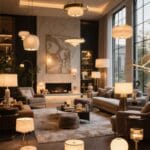

While many factors contribute to the effective display of art, accent lighting stands out as an essential element that can profoundly impact an audience’s experience. Utilizing narrow beam angles of less than 20°, accent lighting creates focused illumination that draws attention to key details and textures within art displays. This focused approach enhances visual impact, allowing viewers to appreciate the nuances of each piece. For ideal results, lighting design should incorporate fixtures with a high Color Rendering Index (CRI), guaranteeing colors remain vibrant and true. Additionally, employing UV-filtering options protects sensitive artworks from damage. Ultimately, accent lighting not only elevates the ambiance of a space but also guarantees even coverage, enriching the overall gallery experience for all who visit. Incorporating energy-efficient lighting options can further enhance the sustainability of art displays.
Understanding Beam Angles and Their Impact
Understanding beam angles is vital for achieving the best possible lighting effects in art display settings. A narrow beam angle, measuring less than 20°, produces concentrated light, effectively highlighting specific features of the artwork. Conversely, wider angles, over 40°, promote uniform illumination across larger areas, ensuring that details remain visible. Selecting the appropriate beam angle enhances art lighting designs by optimizing light intensity and minimizing glare, thereby improving the viewer’s experience. The Color Rendering Index (CRI) is also important; higher values promote accurate color representation under varying beam spreads. Understanding these factors in relation to the viewing environment greatly impacts how art is perceived, making the right beam angle a must-have in any well-planned exhibition space. Furthermore, incorporating dimmable lighting options allows for greater flexibility in adjusting the light intensity based on the art and the time of day.
Recommended Products

Dimmable: Upgrade your lighting with the Aisilan LED Ceiling Spotlight, featuring dimmable triac technology for a wide dimming range (10%-100%). Whether for cozy evenings or focused tasks, adjust the brightness effortlessly

AAA Batteries Not Included: Please note that the remote control requires AAA batteries, which are not included. Make sure to purchase them separately for uninterrupted control of your ceiling light fixture
Techniques for Offsetting Lights to Reduce Glare
Effective lighting design for art requires careful consideration of glare reduction techniques, as directly facing light sources can diminish viewers’ enjoyment of the artwork. Positioning light fixtures at a 30-degree angle from the artwork enhances illumination while minimizing reflective glare. Offset mounting options help direct light away from direct viewing angles, ensuring a more pleasant experience. Experimenting with different heights and positions of adjustable fixtures can lead to the ideal setup that maximizes glare-free viewing areas. Additionally, utilizing non-glare or anti-reflective glass allows for precise aiming of lights without distractions. By measuring the height from the ceiling to the top of the art and adding one-third the artwork’s height, effective light placement can enhance art illumination considerably. Incorporating adjustable color temperatures allows for further enhancement of different artwork styles.
Recommended Products

Attention:Before purchasing the lamps, please buyers check the size of the lamps, so as to avoid installation problems when installing. (Fixture size: diameter - 3.94 inches, height - 3.94 inches)

💡5 COLOR SELECTABLE➤5 color temperature options that can be easily adjusted with the back switch, to match the surrounding environment or to preference. 5CCT in single directional lighting: 2000K warm white, 3000K soft white, 4000k cool white, 5000k daylight white, 6000k daylight glow

💡3 COLOR SELECTABLE➤Possibility of selecting color temperature for each directional lighting:3000k warm white, 4000k neutral white, 5000K day light
UV Protection: Safeguarding Your Artwork
Protecting artwork from harmful ultraviolet (UV) radiation is crucial for preserving its vibrancy and integrity over time. UV protection can be achieved through various methods, including the use of conservation-grade LED fixtures, which emit minimal UV radiation. Additionally, UV-filtering films can be applied to windows, while anti-reflective glass reduces glare and provides necessary UV protection. By carefully considering ambient light and actively evaluating lighting conditions, collectors can notably diminish harmful UV exposure. Implementing these protective measures not only safeguards artwork but also enhances the longevity of displayed art. These strategies are fundamental for maintaining the appearance and value of precious pieces, ensuring that they can be enjoyed for generations to come. Furthermore, utilizing energy-efficient lighting options can contribute to lower overall energy costs while providing effective illumination for art displays.
Best Practices for Art Lighting Design
When designing lighting for art, it’s essential to take into account several key factors that enhance the viewing experience while protecting the pieces themselves. First, utilize narrow beam angles, ideally less than 20°, for accent lighting to highlight specific artworks. Integrate UV filters in lighting fixtures to safeguard against harmful radiation. Position lights at an aiming angle of around 30° to minimize glare, thereby improving artwork visibility. Balance ambient and accent lighting to create even illumination, preventing harsh shadows. Finally, regularly assess light intensity and direction with dimming controls to adapt to various exhibitions. Following these best practices not only enhances the aesthetic appeal but also guarantees the longevity of the artwork on display. Additionally, consider using dimmable cordless options to customize brightness levels for different art styles and settings.
Recommended Products

Versatile Spotlight Ceiling Light:5-color LED spotlight indoor ceiling can switch between 2700K(soft white),3000K(warm white),3500K(neutral white),4000K(cool white),5000K(daylight),you can Feel free to switch the desired lighting effect according to different needs. ceiling spotlight are perfect for creating the desired atmosphere in any space.

Light Quality & Performance: 12W LED spot light indoor with 97 CRI American chip delivers 953 lumens of 3000K warm white light; Flicker-free technology reduces eye strain for artwork and reading
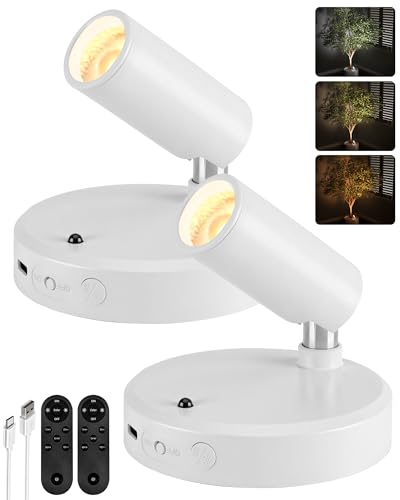
Powerful Rechargeable Spotlight: The EZVALO plant spotlight indoor features a built-in 5500mAh rechargeable battery, delivering up to 150 hours of runtime at low brightness or 25.5 hours at high brightness (varies by brightness setting). This battery operated spot light provides 100 lumens of soft, glare-free illumination, perfect for accent lighting. It fully charges in just 5 hours via USB-C, Ideal for lighting plants, artwork, and small decorative areas.
Integrating Technology for Enhanced Lighting Solutions
Innovating art illumination can greatly transform how viewers experience and appreciate artworks. By integrating smart lighting systems, galleries can achieve energy savings through adjustable beam angles and dimming controls, ensuring proper illumination without causing glare. Tunable white technology provides the flexibility to modify color temperatures, simulating natural daylight that enhances the artwork’s CRI (Color Rendering Index). Implementing automated scenes with wireless protocols allows the lighting environment to adapt based on time of day or visitor presence, creating a dynamic atmosphere for art displays. In addition, app-based management offers users the ability to customize lighting setups remotely, providing an essential tool for preserving art and optimizing the viewing experience. These advancements are transforming how art is showcased for modern audiences. Furthermore, incorporating dimmable lighting options allows for personalized adjustment of brightness, greatly enhancing the viewer’s overall experience.
Recommended Products

Pendant Light – Handmade Textured Design: This plug in pendant light is handcrafted with a woven paper rope shade and sturdy metal frame. Its natural texture and boho style design create a warm and elegant atmosphere, making it not just lighting but also a unique piece of home décor.

【Modern Bubble Crystal Chandelier Size】:3-Light Bubble Crystal Pendant Light. Lamp Body size: W2.6",H13.8". Ceiling canopy :W7.9". Height 59"(MAX)

Three-Layer Lighting: This kitchen pendant light innovatively positions three-layer light strips on its sides, bottom, and curves for 360° surround lighting. It offers vibrant colors for visual expression, becoming a focal point in your space.
Frequently Asked Questions
How Will Beam Angle Affect Home Lighting?
Beam angle considerably affects home lighting, with narrow beams focusing light intensity and enhancing color accuracy on artwork. Proper fixture placement considers room dimensions, creating ambiance while managing shadow effects and surface reflections to highlight techniques and art framing.
What Are the Rules for Lighting Artwork?
Effective art lighting techniques involve selecting appropriate color temperatures, utilizing spotlight placement strategies, and implementing dimming options. Additionally, fixtures should be compared for style, glare reduction methods should be applied, and ambient lighting should be integrated for wall art enhancement.
What Is the Best UV Light for Art Inspection?
Like a detective with a magnifying glass, using UV lights that emit 365nm to 395nm is essential for art inspection. Prioritize high CRI, portable options, and UV filters to mitigate exposure risks during evaluations.
What Is the Best Beam Angle for LED Lights?
The best beam angle for LED lights in gallery lighting typically ranges from 10° to 40°. This selection enhances art illumination, improves visual impact, and maintains LED efficiency, while minimizing energy consumption through effective fixture placement and spotlight types.