As an Amazon Associate, we earn from qualifying purchases. Some links on this site are affiliate links at no extra cost to you. Our recommendations are based on thorough research and editorial judgment.

Retrofits Vs Replacements: Greener Paths to Better Light

LED retrofits and new fixtures each present unique benefits for lighting efficiency and sustainability. Retrofits offer lower upfront costs and can save up to 90% in energy consumption, while requiring minimal disruption during installation. New fixtures often enhance aesthetics and improve light distribution, providing better energy management features. Evaluating the existing fixtures’ condition is essential for making an informed choice. Understanding these options will guide effective lighting upgrades, which can lead to improved safety and long-term financial benefits.
Key Takeaways
- LED retrofits offer immediate cost savings and reduced disruption, making them a practical option for enhancing existing lighting systems.
- New fixtures provide superior aesthetics and light distribution, leading to improved energy efficiency and higher long-term savings despite higher upfront costs.
- Utility rebates often favor fixture replacements, making them financially attractive for facilities looking to upgrade their lighting.
- LED upgrades significantly lower energy consumption, enhancing sustainability and supporting corporate eco-friendly initiatives through reduced reliance on non-renewable energy sources.
- Improved lighting quality from both retrofits and replacements can elevate workplace productivity, safety, and overall asset value for businesses.
What’s the Difference Between an LED Retrofit and a New Fixture?
Often, individuals and businesses face the choice between an LED retrofit and a new fixture when upgrading their lighting systems. An LED retrofit upgrades existing fixtures using LED components, allowing for efficient solutions without significant rewiring or alterations. In contrast, full replacements entail installing entirely new fixtures, which often deliver enhanced aesthetics, energy efficiency, and improved light distribution. While LED retrofits can result in immediate cost savings and less installation disruption, full replacements usually promise higher energy savings and reduced maintenance over time. Additionally, utility rebates often favor complete fixture upgrades, incentivizing energy-efficient projects that meet specific certification standards. Understanding these differences enables decision-makers to align their choices with energy efficiency goals and budgetary considerations. Moreover, LED bulbs offer up to 90% energy savings compared to traditional options, making them a compelling choice for environmentally conscious consumers.
Recommended Products

【Superior Illumination & Energy Savings】Long-life LEDs, coupled with high-efficiency drivers,provide superior quantity and quality of illumination for extended service life.High efficacy of 150 lm/w reaches a lumen count of 7500,Flicker-free 0-10V dimmable external driver Up to 56% higher efficiency than fluorescent, service life is 50000+ hours,The design of "central basket" ensures more uniform light output and less shadows, making the interior feel larger and more open.

【Ultra-Efficient LED Technology】150 lm/W high-efficiency LEDs paired with advanced drivers deliver 5200 lumens output.50,000+ hour lifespan achieves 56% energy savings vs fluorescent lighting. Slim 1.97-inch profile fits standard 2x2 grids.
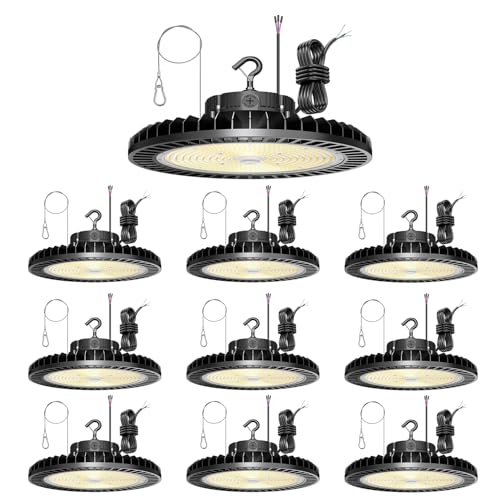
☀Dimmable & Crazy Bright: YELLORE 500w led ufo high bay light have a 0-10V seamless dimming function, any suitable brightness for your choice. It supports 100-277V input voltage and 70000 lumens output, where the brightness is up to 140LM/W, provides 5000k lighting effect. Moreover,the led ufo light use advanced SMD 3030 chips and color rendering index Ra≥80.
Pros and Cons of Retrofits
While evaluating the suitability of LED retrofits for lighting upgrades, it is essential to contemplate both the advantages and disadvantages these solutions offer. LED retrofits typically present lower upfront hardware costs, making them appealing for budget-conscious facilities. These upgrades often yield significant energy savings, reducing consumption by up to 90%, and they can lead to lower maintenance costs thanks to the long lifespan of LED products. Moreover, retrofitting offers minimal disruption during installation, allowing businesses to maintain operations. However, compatibility challenges may arise with existing ballasts, complicating some installations. Additionally, utility rebates often favor replacing fixtures instead of retrofits, which emphasizes the importance of reviewing available incentives to maximize overall savings during lighting projects. Furthermore, investing in energy-efficient LED bulbs can enhance lighting quality while contributing to overall sustainability.
Advantages of New Fixtures
Maximizing energy efficiency is a crucial concern for modern facilities, making the advantages of new fixtures more compelling than ever. New LED fixtures, for instance, offer significant energy savings, substantially lowering operational costs compared to outdated systems. When replacing old lighting, facilities benefit from enhanced aesthetics and superior optics, ensuring improved light distribution. Advanced features such as built-in dimming and occupancy sensors enhance functionality and energy management, supporting sustainability goals. In addition, new fixtures deliver higher lumen output than retrofitting options, leading to brighter and more effective illumination. Although the initial expenditure for replacement may be higher, reduced maintenance and energy costs can translate into significant long-term savings, establishing new fixtures as a sound investment in cost-effective lighting solutions. Furthermore, energy-efficient designs allow for cost savings of up to 90%, reinforcing the value of modern fixtures over their older counterparts.
Choosing Between Retrofit and Fixture Replacement
Choosing the right lighting upgrade strategy requires a careful evaluation of both retrofitting and fixture replacement options. Retrofitting existing fixtures to accommodate LED lighting is often a more cost-effective solution that drastically reduces energy consumption by up to 90%. Evaluating the condition of current fixtures is essential, as compatibility with new LEDs affects the retrofit’s effectiveness. Meanwhile, fixture replacement may present utility rebates that can offset higher costs, warranting further investigation. The disruption caused by retrofitting is typically less than that of full fixture replacements, allowing operations to continue smoothly. A hybrid approach, utilizing retrofitting in less critical areas and fixture replacement in high-impact zones, is frequently recommended for achieving significant energy efficiency in lighting designs.
Professional Assistance and the Importance of Energy Audits
To guarantee successful lighting upgrades, seeking professional assistance is critical, as experts can provide invaluable insights tailored to specific facility needs. Conducting energy audits is essential for identifying inefficiencies in existing lighting fixtures and recommending effective retrofitting options that enhance energy efficiency. These audits help facilities understand the impact of lighting on overall energy consumption, ensuring informed decisions align with sustainability goals and budget constraints. Additionally, lighting professionals can navigate local incentives and rebates, improving the financial feasibility of upgrades. A thorough evaluation by experts not only drives immediate improvements but also secures long-term benefits, including enhanced performance and reduced operational costs, making professional assistance a must-have in any lighting upgrade initiative. Moreover, selecting high-quality materials in lighting solutions can significantly reduce maintenance costs and enhance durability.
Long-term Benefits of LED Upgrades
Implementing LED upgrades offers numerous long-term advantages that greatly enhance both operational efficiency and workplace experience. LED technology allows businesses to replace outdated lighting systems while markedly reducing energy consumption by up to 90%. This drastic decrease in energy costs not only stabilizes monthly expenses but also aligns with evolving corporate sustainability goals, promoting an eco-friendly image. Furthermore, LED products boast impressive lifespans between 25,000 and 50,000 hours, which translates to lower maintenance and replacement costs over time. Enhanced lighting quality from LEDs positively impacts workplace productivity and employee satisfaction, consequently contributing to overall business success. Additionally, businesses may qualify for utility rebates and incentives, further promoting environmentally responsible practices while maximizing financial savings. Energy efficiency ratings are also a crucial factor in selecting LED systems, ensuring optimal savings and performance over time.
Versatility in Applications for LED Solutions
While acknowledging the diverse settings in which LED solutions can be applied, it becomes clear that their versatility greatly enhances energy efficiency and user experience across various industries. In commercial, industrial, residential, healthcare, retail, and educational environments, LED lamps replace existing fixtures seamlessly, ensuring minimal downtime. For instance, commercial complexes can achieve energy efficiency by reducing utility bills up to 90% compared to traditional lighting. Healthcare facilities benefit from reliable illumination that enhances safety and comfort in patient areas. Retail spaces thrive on improved visibility and color rendering, which boosts customer engagement. Additionally, outdoor areas like parking lots and parks see enhanced safety through well-distributed LED lighting, promoting community trust and security. Hence, LED solutions present compelling opportunities across sectors. Moreover, the integration of solar-powered options presents an eco-friendly alternative for outdoor illumination, further improving sustainability efforts.
Enhanced Safety and Security With Improved Lighting
With the broadening scope of LED solution applications, the discussion naturally shifts to the pivotal role that enhanced lighting plays in safety and security. Improved lighting in parking lots markedly boosts visibility, fostering a safer environment that reduces crime rates and elevates user confidence. Additionally, well-lit areas in hospitals not only enhance patient comfort but also improve staff productivity and safety, minimizing the chances of accidents. Transportation hubs benefit from better lighting as studies show a 30% drop in accidents in well-illuminated spaces. Moreover, adequate lighting in industrial and commercial settings is essential for preventing workplace injuries. Upgrading existing fixtures to brighter, energy-efficient designs aligns with community sustainability goals while ensuring minimal disruptions to outdoor recreational areas, ultimately enhancing safety for all. Well-placed solar outdoor lights can significantly enhance visibility and security in these environments.
Time and Effort Savings With LED Upgrades
Upgrading to LED lighting presents considerable time and effort savings, as retrofitting typically allows for a faster installation process than complete fixture replacements. By utilizing existing fixtures, businesses can often avoid extensive rewiring, which greatly reduces the overall project timeline. This streamlined installation process permits a swift shift, allowing operations to continue with minimal disruption. Additionally, retrofitting LED components directly into current setups not only reduces energy use but also enhances return on investment almost immediately. New fixtures can easily accommodate various design types without the need for major structural changes. As a result, companies looking to upgrade should consider LED retrofitting for efficient implementations that enable productivity while markedly improving their lighting solutions. Furthermore, many modern LED systems offer energy efficiency ratings that significantly lower operating costs over time.
Frequently Asked Questions
How Do Retrofits Impact the Aesthetic Appearance of Older Fixtures?
Retrofitting can enhance the aesthetic of older fixtures by ensuring design consistency and maintaining vintage charm. However, fixture compatibility and color temperature adjustments are essential for achieving visual harmony without compromising the original character of the design.
Are There Financial Incentives for Choosing Retrofits Over Replacements?
“There’s more than one way to skin a cat.” Financial benefits often favor retrofits due to government rebates and energy savings, offsetting installation costs and providing long-term investments that enhance sustainability without replacing entire fixtures.
What Is the Lifespan Difference Between Retrofitted LEDS and New Fixtures?
The lifespan comparison between retrofitted LEDs and new fixtures reveals that retrofits may have slightly shorter lifespans. However, energy efficiency, lower maintenance costs, and minimal installation time can mitigate their environmental impact considerably.
Can Retrofitting Be Done on Any Type of Lighting System?
Retrofitting compatibility varies by fixture types, influencing installation feasibility. Energy efficiency improvements largely depend on technology advancements, making some systems prime candidates for retrofitting while others may need complete replacement to maximize benefits.
How Do Light Quality and Output Compare Between Retrofits and Replacements?
Light performance varies between retrofits and replacements, influencing lumen output, color temperature, and brightness levels. Typically, replacements offer improved energy efficiency, providing greater luminance and enhanced color fidelity, whereas retrofits may yield less impactful enhancements.