As an Amazon Associate, we earn from qualifying purchases. Some links on this site are affiliate links at no extra cost to you. Our recommendations are based on thorough research and editorial judgment.

Recessed Can Layouts: Room Size, Beam Spread, and Spacing

Recessed can layouts depend on room size, beam spread, and spacing for effective illumination. Measure your room’s square footage, then calculate the number of fixtures needed based on the fixture size—4-inch lights cover about 25 sq ft, while 6-inch lights cover roughly 36 sq ft. Properly space fixtures by dividing ceiling height by two, ensuring a distance of 2 to 3 feet from walls. Different rooms require unique layouts, which reveal additional insights to enhance your design choices.
Key Takeaways
- Room dimensions and ceiling height determine fixture spacing for even light distribution, ideally placing lights half the distance of the ceiling height apart.
- A 4-inch recessed light covers about 25 sq ft, while a 6-inch light covers approximately 36 sq ft, affecting how many are needed.
- Beam angles influence spacing; wider angles (above 46°) allow greater separation between fixtures for uniform lighting.
- For proper spacing, maintain 2 to 3 feet from walls to reduce shadows and enhance overall illumination quality.
- Specific layouts vary by room; kitchens require tight spacing (30-36 inches apart) while living rooms benefit from wider gaps (5-6 feet apart).
Key Factors in Recessed Lighting Design
You may be interested



When designing a recessed lighting layout, several key factors must be meticulously considered to achieve ideal results. Room dimensions and ceiling height influence the necessary spacing for fixtures, ensuring even illumination throughout the area. As a guideline, lights should be positioned half the distance of the ceiling height apart. Beam angles play a vital role in determining fixture placement; wider angles allow for greater spacing without sacrificing light output. To fulfill desired brightness levels, ambient lighting requirements can vary markedly based on activities—areas like kitchen or reading spaces may need 100-300 lumens per square foot. By incorporating layered lighting and maintaining consistent installation practices, designers can create vibrant, functional spaces that enhance both aesthetics and utility. Moreover, selecting fixtures with energy-efficient designs can significantly reduce overall power consumption, contributing to more sustainable home renovations.
Calculating the Number of Recessed Lights Needed
How can one accurately determine the number of recessed lights needed for a space? First, measure the room size by multiplying its length by its width. For precise lighting, know that a 4-inch recessed light typically covers approximately 25 square feet, while a 6-inch light covers about 36 square feet. To estimate the number of lights required, divide the total square footage by the coverage area of the chosen fixture. Additionally, consider the ceiling height; higher ceilings may necessitate fewer fixtures due to broader beam spreads. Finally, assess desired brightness levels and task lighting needs, as activities like reading or cooking may require increased lighting, potentially modifying the ideal number of lights for enhanced performance. It’s important to note that selecting recessed lights with adjustable color temperatures can significantly enhance the ambiance of your space.
Recommended Products
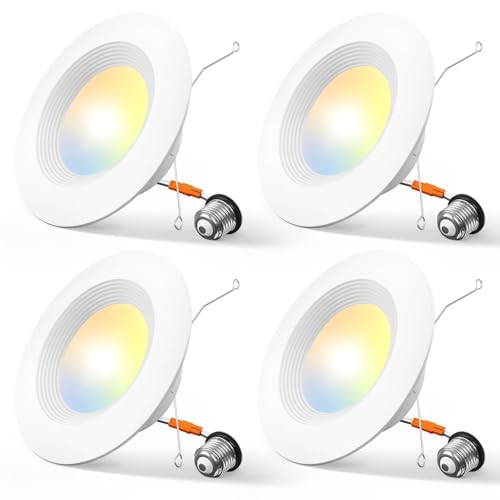
Eye protection: The brightness of the can lights can be smoothly adjusted from 10% to 100%, so you can choose the most comfortable brightness for your eyes. Note: This light is compatible with most dimmers on the market, except for the smart dimmer.
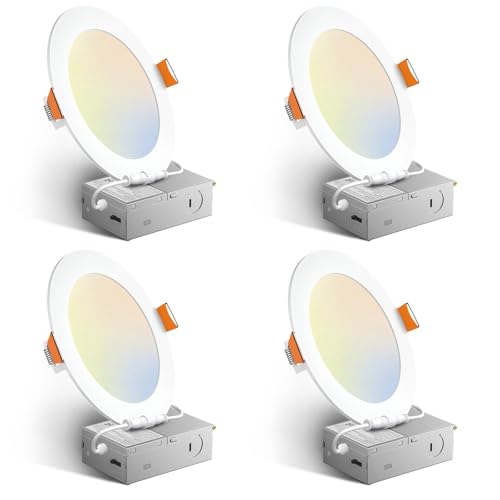
Slim Wafer Light: Amico's 6 inch 5CCT slim wafer LED downlight with junction box housing & trim kits.

5 CCT-in-1: 5 color temperature(2700K, 3000K, 3500K, 4000K, 5000K) is selectable to you, which successfully eliminates the hassle of returning or exchange products due to inappropriate color temperature. Just slide the switch on the side of the J-box and you will get the most-desired color that best fit in your room type.
Proper Spacing Between Recessed Lights
Achieving proper spacing between recessed lights is essential for creating a well-lit and visually appealing environment. Generally, spacing should be calculated by dividing the ceiling height by two; for example, in an 8-foot high ceiling, recessed lights should be about 4 feet apart. Additionally, maintaining a distance of 2 to 3 feet from walls is vital for minimizing shadows and achieving even coverage. For higher ceilings, such as 9 to 10 feet, spacing can extend from 5 to 7 feet apart, depending on the room type. Consistent spacing not only enhances light distribution but also prevents dark spots. Consider the beam angle of fixtures, as those with a wider angle allow for greater spacing without sacrificing lighting requirements. Utilizing energy-efficient lighting solutions can further optimize your lighting layout while reducing overall energy consumption.
Beam Angle Selection for Optimal Lighting
Selecting the appropriate beam angle for recessed lighting plays a pivotal role in achieving ideal illumination in any space. Beam angle selection greatly impacts light coverage and preferred lighting. Narrower angles, around 25° to 35°, are great for accenting features or artwork, while a 36° to 45° beam angle is effective for balanced general lighting. For greater spacing between fixtures, a wider beam angle—above 46°—provides even light distribution, which is essential in minimizing shadowy areas. Additionally, ceiling height should guide the choice of beam angle; higher ceilings benefit from wider angles to maintain illumination without overcrowding fixtures. Finally, ensuring a high Color Rendering Index (CRI) enhances color accuracy, thereby enriching the overall ambiance of the space. The versatility of customizable color temperatures in recessed lights can further assist in achieving the desired mood and atmosphere.
Recommended Products

Warm & Comfortable Home Lighting: This 3-inch square home indoor directional wall surface fixture delivers a cozy 3000K warm white glow with a high CRI ≥97 for true-to-life colors. Producing 1080 lm with a focused 36° beam angle, it works perfectly as a LED ceiling spotlight for corridors, kitchens, living rooms, bedrooms, or walk-in closets.

BEAUTIFUL, EFFICIENT, BRILLIANT - Building upon the Soraa legacy of color quality, Soraa BRILLIANT 3000K LED MR16 bulbs emit a soft white light under which colors look vibrant and whites; Our Point Source Optics afford you the ultimate control with a precise 36° beam

5 CCT-in-1: 5 color temperature(2700K, 3000K, 3500K, 4000K, 5000K) is selectable to you, which successfully eliminates the hassle of returning or exchange products due to inappropriate color temperature. Just slide the switch on the side of the J-box and you will get the most-desired color that best fit in your room type.
Understanding Ceiling Height Impact on Layout
Understanding the impact of ceiling height on the layout of recessed lighting is crucial for achieving an evenly lit space. The general guideline suggests that fixtures should be spaced approximately half the ceiling height apart. For instance, in an 8-foot high ceiling, lights should be spaced 4-6 feet apart to guarantee even illumination and minimize shadows. Conversely, higher ceilings, such as those at 9-10 feet, may require 5-7 feet spacing for effective lighting coverage. Additionally, the beam angle of recessed lights affects spacing; wider angles (46°+) allow greater distances, while narrower beams (25-35°) necessitate closer placement. Proper light placement, tailored to ceiling height, is essential to fulfilling both ambient and task lighting needs effectively, creating an ideal layout. By incorporating dimmable features in your lighting design, you can further enhance the versatility of the space.
Room-Specific Layout Tips for Recessed Lighting
The impact of ceiling height on recessed lighting layouts naturally leads to deliberations based on room-specific needs. In kitchens, position recessed lights directly above workstations, spacing them 30 to 36 inches apart for ideal task lighting without unwanted shadows. For living rooms, an effective recessed lighting layout involves placing lights about 5 to 6 feet apart, creating a grid while considering seating to prevent direct overhead light on furniture. In bathrooms, confirm bathroom recessed lighting is 3 to 4 feet apart around the vanity for shadow-free illumination. For dining areas, position lights 30 to 36 inches above the table, fostering an inviting atmosphere. In basements, space recessed lights 4 to 6 feet apart to maximize coverage and guarantee desired lumens per fixture without lights too close together. Additionally, customizable lighting can enhance the overall ambiance when used in combination with recessed lights.
Installation Considerations and Cost Overview
When considering recessed lighting installation, several factors come into play, guiding homeowners through a successful lighting upgrade. Key installation considerations include evaluating the correct spacing to install recessed lights evenly and utilizing a recessed lighting calculator for ideal placement. Understanding costs for recessed lighting is essential; DIY installation typically ranges from $30 to $80 per fixture, while hiring a licensed electrician can escalate costs to $150 to $300 per fixture. Homeowners should also account for potential adjustments like working around existing fixtures and regional labor rates. It is critical to review local building codes, ensuring compliance and safety, particularly for complex setups. Overall, careful planning and budgeting lead to a rewarding lighting transformation. Additionally, opting for IC-rated fixtures can enhance safety and energy efficiency in insulated ceilings.
Recommended Products

4 Inch New Construction Can Recessed Light Housing

[Selectable Colors] There are 5 selectable color temperatures (2700K, 3000K, 4000K, 5000K, and 6000K) available for our LED can lights. You do not have to worry about the color temperature before selecting the product.

Selectable Colors:Our LED can lights have 5 color temperature selectable, 2700K, 3000K, 4000K, 5000K, 6000K. Don't worry about what color temperature to buy, eliminates the hassle of returning or exchanging these due to inappropriate color temperature.
Frequently Asked Questions
How Many Recessed Lights for a 12X12 Room?
For a 12×12 room, four to six recessed lights are recommended. Room lighting tips include considering ambient lighting techniques and task lighting benefits, with attention to ceiling height, dimmable options, and reflective surfaces for enhanced efficiency.
How Many Recessed Lights for a 10X20 Room?
For ideal room illumination in a 10×20 room, 6 to 8 recessed lights are recommended. Considerations include ceiling height, beam angle, fixture placement, energy efficiency, and style integration for perfect lighting ambiance and color temperature.
What Is the Spacing for 6 Inch Recessed Lights?
Spacing for 6-inch recessed lighting typically ranges from 4 to 7 feet, depending on ceiling height and beam angles. Proper layout design guarantees ambient light, effective task lighting, and energy efficiency while considering installation tips and bulb types.
How to Decide How Many Recessed Lights Are in a Room?
To determine recessed light quantity, consider lumens output, light placement based on ceiling height, bulb types, and fixture styles. Additionally, evaluate energy efficiency, room functions, and ambiance creation while adhering to electrical codes and incorporating dimmer switches.