As an Amazon Associate, we earn from qualifying purchases. Some links on this site are affiliate links at no extra cost to you. Our recommendations are based on thorough research and editorial judgment.

Voice, App, or Sensors: Choosing the Right Control Mix

Choosing the right control mix for smart lighting involves understanding the strengths of voice, app, and sensor technologies. Voice control provides unmatched convenience, allowing hands-free adjustments for brightness and color. App control offers detailed oversight, enabling personalized schedules and extensive integration across devices. Meanwhile, sensors enhance automation by responding to occupancy and natural light. To achieve a seamless experience, consider family preferences, environmental factors, and device compatibility. Further insights can refine your smart lighting setup effectively.
Key Takeaways
- Assess your environment; opt for app control in noisy settings, while voice control is ideal for hands-free convenience.
- Consider household members’ preferences—older individuals may benefit more from intuitive app interface rather than voice commands.
- Evaluate desired customization; app control allows for more tailored lighting settings compared to the simplicity of voice control.
- Ensure compatibility of smart devices within your ecosystem for seamless integration across voice, app, and sensor controls.
- Factor in security and privacy concerns when selecting a mix of control methods for your smart lighting system.
The Advantages of Voice Control for Smart Lighting
You may be interested



How does voice control revolutionize the way individuals interact with smart lighting systems? This technology offers unparalleled convenience, allowing users to execute hands-free commands through popular voice assistants like Amazon Alexa or Google Assistant. With voice control, individuals can effortlessly manage smart lighting, adjusting brightness and colors in response to simple commands. This command technology enhances the creation of personalized lighting scenes, optimizing ambient lighting for activities such as movie nights or reading sessions. Additionally, multi-room control streamlines user interactions across different spaces, improving overall efficiency in smart home automation. Voice control for smart devices not only elevates comfort and security but also positions itself as an essential feature in modern residential and commercial environments. Furthermore, many smart bulbs support voice commands via Alexa and Google Home, allowing for a seamless integration into users’ daily routines.
Recommended Products

Smart APP Control: Easily control the ceiling light's switch, brightness, and color remotely through the Tuya APP. Compatible with Alexa and Google Home for voice control, eliminating the hassle of manual switching. 𝐍𝐎𝐓𝐄: 𝐇𝐚𝐫𝐝𝐰𝐢𝐫𝐞𝐝 𝐂𝐞𝐢𝐥𝐢𝐧𝐠 𝐋𝐢𝐠𝐡𝐭, 𝐍𝐨𝐭 𝐁𝐚𝐭𝐭𝐞𝐫𝐲 𝐏𝐨𝐰𝐞𝐫𝐞𝐝

Universal Remote for Ceiling Fan with Light - Simply adds this smart fan controller to your ceiling fan to have it wifi enabled and remote controllable. Change your fan speed or turn on/off light from anywhere with your smartphone or included RF remote (batteries not included). The size of the receiver that is 4.5*2*1 inch, just make sure there is enough space in your fan canopy to make sure it fits your fan!

【4 Fan Speeds】 Tailor your airflow to your exact preferences by choosing from four fan speeds for the utmost comfort
Exploring the Benefits of App Control
App control stands out as a powerful tool for managing smart home devices, offering users a centralized hub for thorough oversight and customization. Mobile apps enable users to create personalized schedules, adjusting settings that may not be possible through voice commands alone. This control system emphasizes convenience and flexibility, allowing users to operate their smart technology via smartphones, tablets, or laptops. Unlike voice control, app control often guarantees reliable operation in noisy environments, making it a preferred choice for many. Hubitat’s mobile app facilitates extensive integration across various smart device platforms, assuring seamless connectivity regardless of the selected control method. Additionally, many smart bulbs offer customizable lighting options, further enhancing the control experience. This solid reliability, combined with user-friendly features, makes app control an essential component in modern smart home ecosystems.
Recommended Products

Multicolored Lighting: The main light of smart ceiling light is RGB+WW, while the back light is RGBIC. With 16 million background colors, the back light enriches the whole house atmosphere. Note: The WW of the main light and back light cannot be on simultaneously.
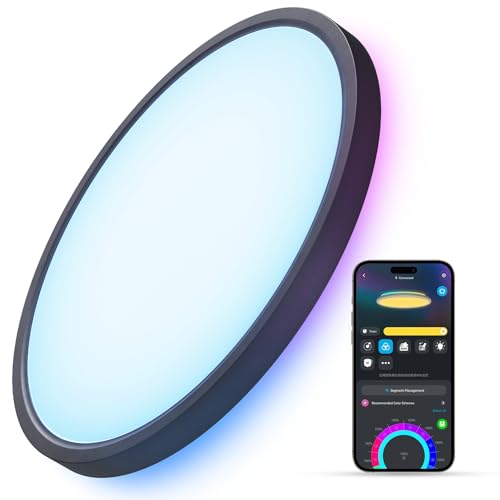
Multicolored Lighting: The main light of smart ceiling light is RGB+WW, while the back light is RGBIC. With 16 million background colors, the back light enriches the whole house atmosphere. Note: The WW of the main light and back light cannot be on simultaneously.

Smart Ceiling Fans 2 in 1 Design: Dimmable Led + 6 Wind Speeds + Timing Function + Reversible Wind + DC Motors. Whether cooling for comfort or providing light, this lightweight ceiling fan is a versatile option that also blends well into your home decor.Caged Ceiling Fan with Light.
Enhancing Automation With Sensors
As smart home technology continues to evolve, sensors have become a fundamental component in enhancing automation, allowing devices to react intelligently to their surroundings. Motion sensors, for instance, can trigger lighting or security systems, promoting convenience and safety effortlessly. Smart thermostats utilize temperature sensors to improve heating and cooling based on occupancy, greatly enhancing energy efficiency while saving costs. Additionally, light sensors adjust indoor and outdoor lighting systems according to natural light levels, ensuring ideal ambiance and energy conservation. With effective voice control integration and app controls, these sensors create a seamless experience, enabling the automation of everyday tasks without manual intervention. Overall, harnessing the full potential of sensors is essential for achieving a smarter and more energy-efficient home. Furthermore, the integration of high lumen outputs can significantly enhance visibility and security, especially in outdoor settings.
Recommended Products

5 Color Temperature Options – This outdoor ceiling light offers five popular light shades from 2700K to 5000K (2700K, 3000K, 3500K, 4000K, 5000K). Easily match the perfect atmosphere for your porch or entryway, from cozy warm white to energetic daylight

【4 Smart Lighting Modes】 The motion sensor ceiling light meets various needs with 4 modes: ①Auto Mode: Lights up when motion is detected for 5-180s, an ideal choice for energy-saving security. (Night only) ②DTD Mode: Provides dusk-to-dawn illumination, perfect for consistent night lighting. ③Manual Override Mode: Stays on for 5.5 hours with a quick OFF-ON switch toggle, auto turn off at dawn and back to auto mode ④ON Mode: the outdoor light fixture offers constant light day and night on this mode, controlled by an external wall switch for ultimate flexibility.

2 Installation Methods: Round flush mount ceiling light can be installed on the ceiling or a wall. The lighting looks like a moon or sunset, creates different moods. ( 𝐖𝐢𝐫𝐞𝐝 𝐦𝐨𝐭𝐢𝐨𝐧-𝐬𝐞𝐧𝐬𝐨𝐫 𝐥𝐢𝐠𝐡𝐭, 𝐧𝐨𝐭 𝐰𝐢𝐫𝐞𝐥𝐞𝐬𝐬)
Considerations for Choosing Your Control Method
Selecting the appropriate control method for a smart home system considerably influences overall user experience and functionality. When deciding between control versus app control, consider the environment; app controls excel in noisy settings while voice control shines in hands-free scenarios. Assess the usability and accessibility for all household members, keeping in mind that older individuals may prefer intuitive app controls. Evaluate the level of customization desired, as app control offers tailored automation while voice control prioritizes ease of use. Additionally, verify the compatibility of smart devices for seamless integration within the smart home ecosystem. Furthermore, ensure that your system has wireless dimmer switch compatibility to maximize flexibility and energy efficiency in your lighting solutions. Finally, prioritize security and privacy concerns, such as utilizing encrypted networks and updating software regularly, to guarantee a safe and efficient smart home experience.
Recommended Products

Smart Convenience Everywhere: The DREO smart ceiling fans with lights is compatible with the DREO APP, Alexa & Google Home, allowing you to adjust fan speed and lights easily via voice command or click on App. The customizable preset modes and routines help you create and automate different scenes with just a tap, like reading, working, leisure and nightlight etc.

Smart Ceiling Fan with Lights and remote: This 52 inch ceiling fan with light features a downrod ceiling fan design, ideal for standard or high ceilings in bedrooms, living rooms, or other indoor spaces, as well as outdoor spaces like patios. (Note: Not to be exposed directly to rain). Its sleek black ceiling fan with light combines stylish lighting and powerful airflow. (ventilador de techo / abanico de techo)

【Smart Wi-Fi Version】: Remote / Smart Life APP / Voice - 3 ways to control your ceiling fan & light, dim your lights and adjust the ceiling fan speed from anywhere anytime , Compatible work with Alexa, Google Assistant .
Creating a Seamless Smart Lighting Experience
Creating a Seamless Smart Lighting Experience
How can smart lighting transform a living space into a personalized environment? By utilizing voice commands through platforms like Google Assistant, users can effortlessly manage their smart lighting ecosystem. This technology enables the creation of personalized scenes, such as cozy evenings or vibrant gatherings, enhancing the overall user experience. App control allows for fine-tuning brightness and color preferences, tailoring the atmosphere for various occasions. Compatibility within a smart home setup is vital; verify all devices are connected to a stable Wi-Fi network to minimize command misinterpretation. As advancements in AI-powered voice recognition emerge, users can expect even more intuitive features. An optimized control mix empowers homeowners to achieve truly immersive environments, making smart lighting an essential design choice. Additionally, choosing bulbs with energy efficiency ratings can further enhance cost savings and sustainability in your lighting setup.
Recommended Products

Smart App Control & Voice Control - Use the smart app on your iOS or Android phone or tablet, you can turn on/off the LED RGB ceiling light whether you are at home or out. Customize your home led ceiling lighting system. Compatible with Alexa and Google Assistant.you can control the lights with voice commands to turn on/off or dim/bright, let your hands-free. Note: It only works with 2.4 GHz WiFi. make sure your phone is connected to 2.4 GHz Wi-Fi during setup

Planar Colorful Lighting Effects: Featuring independent control for each light and a total of 121 segments, this ceiling light offers detailed and dynamic planar lighting effects. Built-in preset scenes make creating colorful planar lighting effects easier than ever.

Smart App Control & Voice Control - Use the smart app on your iOS or Android phone or tablet, you can turn on/off the LED RGB ceiling light whether you are at home or out. Customize your home led ceiling lighting system. Compatible with Alexa and Google Assistant.You can control the lights with voice commands to turn on/off or dim/brighten, let your hands-free. Note: It only works with 2.4 GHz WiFi. Make sure your phone is connected to 2.4 GHz WiFi during setupmake sure
Frequently Asked Questions
What Is the Best Voice Control?
The best voice control combines voice recognition advancements with natural language processing, offering exceptional user experience design. It promotes multilingual capabilities, smart device compatibility, and accessibility, while addressing privacy concerns through customizable voice commands and energy efficiency benefits.
What Is the Most Common Application for Voice Control Application?
The most common application for voice control involves smart speakers enabling home automation through voice assistants. Users leverage natural language for efficient control, enhancing convenience, accessibility, and multi-device integration via voice commands and advanced voice recognition technologies.
How to Choose the Right Smart Home Device?
To choose the right smart home device, one must evaluate smart device compatibility, user interface design, integration capabilities, and response accuracy while considering cost effectiveness, installation complexity, security features, brand reputation, remote accessibility, and energy efficiency.
What Is the Voice Control App?
A voice control app utilizes voice technology and natural language processing advancements, enhancing user experience through smart assistants and personalized voice commands. However, accuracy issues and integration challenges with home systems persist, necessitating robust security measures.