As an Amazon Associate, we earn from qualifying purchases. Some links on this site are affiliate links at no extra cost to you. Our recommendations are based on thorough research and editorial judgment.

Lighting Zones and Circuits: Planning Flexible Scenes at Home

Lighting zones and circuits play an essential role in planning flexible scenes within the home. Effective zoning enhances functionality and aesthetics by providing tailored illumination for various activities and moods. Homeowners should assess room functions to optimize lighting placement and select the right fixtures, including ambient, task, and accent lighting. Incorporating smart technology, like programmable scenes and occupancy sensors, offers exceptional adaptability. Understanding these elements will help you create an efficient and appealing lighting scheme in any space. Further insights await.
Key Takeaways
- Define distinct lighting zones in your home to improve functionality and aesthetics for various activities.
- Assess room functions to determine appropriate lighting needs for primary and secondary activities in each space.
- Choose a combination of ambient, task, and accent lighting fixtures to create a balanced atmosphere throughout your home.
- Incorporate smart lighting solutions for programmable scenes that can be adjusted to accommodate different moods and occasions.
- Utilize dimmable fixtures and color temperature options to enhance flexibility and adaptability in your lighting design.
Importance of Lighting Zones
You may be interested


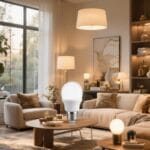
The importance of lighting zones in residential spaces cannot be overstated, as they play a crucial role in enhancing both functionality and aesthetics. By creating distinct lighting zones, homeowners can tailor ambient lighting to suit various activities, resulting in improved usability. This method optimizes energy efficiency, minimizing excess lighting usage in less-frequented areas. Flexibly designed lighting can also enhance the perception of expansive spaces, marking different functional regions without physical barriers. With properly planned lighting, design cohesion is achieved, aligning with architectural features and furniture layout for visual harmony. Additionally, implementing multiple circuits allows for easy adjustment of lighting scenes, empowering occupants to customize their environment for various moods and occasions, ultimately enriching the overall living experience. Integrating energy-efficient bulb options can further reduce electricity consumption and enhance the sustainability of your lighting design.
Defining Flexible Lighting Scenes
Creating flexible lighting scenes is an essential aspect of modern residential design, as it empowers homeowners to craft specific atmospheres tailored to various activities or times of day. By utilizing lighting control systems, residents can achieve customizable illumination that harmonizes ambient lighting and task lighting across different lighting zones. This allows the adjustment of brightness and color temperature, creating bright settings for work or soft atmospheres for relaxation. Smart lighting technologies enable homeowners to automate these scenes, enhancing energy efficiency through multitasking circuits. Additionally, tunable white LEDs can replicate the natural progression of daylight, promoting well-being within living spaces. Ultimately, establishing flexible lighting scenes greatly enhances the harmony and functionality of any home environment. Furthermore, selecting options like smart recessed lighting can significantly improve both energy efficiency and design versatility.
Recommended Products

Upgraded Playfulness: Equipped with RGBWW main light and RGBIC backlight, the backlight supports segmented light control, you can customize each area as you like. Give your home a vivid and personalized transformation. (Not compatible with dimmers)

[Smart voice control] SikSog Smart RGBCW Recessed Lighting is compatible with Alexa voice control light. Support one-step connection. Just say "find the device" to the speaker, and then you turn on the ceiling light. A simple conversation can let you turn on and off the lights, set the color of each light, and dim the lights to match your favorite scenes (such as home theater, bathroom, yoga, game room, etc.). The operation is simple.
Assessing Room Functions and Activities
To effectively assess room functions and activities, it is crucial to understand how each space will be utilized throughout the day, as this directly influences the lighting needs and design. Homeowners should begin by identifying primary and secondary activities within each room, such as cooking or reading. This knowledge allows for the selection of suitable lighting solutions. Furthermore, for multi-functional spaces, flexibility is essential; incorporating adjustable lighting options is a must for creating varying scenes based on daily life, such as dining or relaxing. Analyzing natural light sources at different times aids in optimizing artificial lighting placement, reducing reliance on it during brighter periods. A well-conceived lighting plan, complete with directional arrows, guarantees task lighting effectively supports expected activities. Moreover, selecting fixtures that offer dimming options can enhance the adaptability of lighting to suit various moods and tasks throughout the day.
Recommended Products

Unique Design: The kitchen flush mount ceiling light size is 11.8 in X 4.7 in. The ceiling lights are made of metal and acrylic. The modern design adds a eleglant touch, making it a stunning and stylish

Modern Design Ceiling Light: Add a touch of beauty to your living space with the Bargeni light fixture. The flush mount ceiling light features a black finish with white fabric shade that blends seamlessly with most decor styles. Bargeni kitchen light fixtures can make a difference to your home,creating a cozy atmosphere. The ceiling lighting is perfect for nearly any space such as bedroom, entryway, living room, hallway, bathroom, kitchen,dining room, etc

【Unique Dual Drum Design】This ceiling light showcases a distinctive dual drum design, featuring an elegant outer fabric shade and a softer inner shade, enhancing its visual appeal. The blend of gold metal with the fabric shades creates a modern yet classic look, perfect for a variety of home decors.
Choosing the Right Lighting Fixtures
Selecting the right lighting fixtures is essential for achieving a harmonious balance of function and aesthetic appeal in any space. A well-rounded lighting scheme incorporates ambient, task, and accent lighting tailored to each room’s purpose. Consider the color temperature of bulbs; warm whites (2700-3000K) are ideal for living areas, while neutral whites (3500-4100K) work well in functional spaces like kitchens. Choose fixtures that suit the interior design style—sleek for modern homes and ornate for traditional spaces. Additionally, guarantee moisture-rated fixtures are used in bathrooms for safety. To enhance flexibility, opt for dimmable fixtures or smart lighting options, allowing homeowners to create customizable, flexible lighting scenes that adapt to various activities and moods throughout the day. Incorporating high-quality lighting can significantly improve usability in areas like grooming or makeup application.
Planning Circuits and Switch Locations
Thoughtful planning of circuits and switch locations greatly influences the effectiveness of a home’s lighting design. Strategically incorporating multiple lighting circuits allows distinct control over specific functions in designated lighting zones, supporting flexible scenes throughout the home. Place switch locations near doorways, beds, and frequently used areas to enhance accessibility and minimize glare. Lighting circuits should be distinctly labeled to facilitate user management, guaranteeing clarity for spaces like living rooms, dining areas, and outdoor settings. Employ dimmable controls within these circuits, as they not only allow for brightness adjustments but also considerably improve energy efficiency. Collaborating with a professional electrician guarantees that these circuits meet safety codes and are adaptable to future smart home technologies, enhancing overall functionality. Including dimmable controls in your circuit planning can lead to more customizable and energy-efficient lighting solutions.
Integrating Smart Lighting Solutions
As homeowners increasingly seek enhanced convenience and personalization in their living spaces, integrating smart lighting solutions has become a must-have aspect of modern lighting design. These systems offer advanced lighting control, allowing users to adjust lighting intensity and create programmable scenes for various occasions. Using tunable white LED options, homeowners can shift between warm and cool light, promoting wellbeing by aligning with natural circadian rhythms. Incorporating occupancy sensors optimizes energy usage, automatically adjusting lights based on room activity. Additionally, Wi-Fi-enabled smart bulbs can be easily retrofitted into existing fixtures, making them an accessible upgrade. This combination of customization and technology helps create an inviting ambient glow that suits any mood or activity, enhancing the overall living experience. Furthermore, many smart bulbs provide multi-color capabilities that can enhance the atmosphere, allowing for a vibrant adaptation to different settings.
Recommended Products

Multicolored Lighting: The main light of smart ceiling light is RGB+WW, while the back light is RGBIC. With 16 million background colors, the back light enriches the whole house atmosphere. Note: The WW of the main light and back light cannot be on simultaneously.

Smart App Control & Voice Control - Use the smart app on your iOS or Android phone or tablet, you can turn on/off the LED RGB ceiling light whether you are at home or out. Customize your home led ceiling lighting system. Compatible with Alexa and Google Assistant.you can control the lights with voice commands to turn on/off or dim/bright, let your hands-free. Note: It only works with 2.4 GHz WiFi. make sure your phone is connected to 2.4 GHz Wi-Fi during setup

Ultra-thin Design & Easy Installation: Lumary smart disk lights are just 1.29" thick, perfect for limited-height spaces. The Lumary flush mount ceiling light can be installed easily into any 3.5/4 inch J-box or 5/6 inch recessed can for entrances, hallways, garages, and other areas in your home
Reviewing and Adjusting Your Lighting Plan
Reviewing and adjusting a lighting plan is vital for achieving the desired ambiance and functionality in any space. Homeowners should regularly evaluate their lighting throughout different times of day to observe mood changes, guaranteeing it meets their needs effectively. Adjusting your lighting can include repositioning light fixtures or changing bulb types to optimize specific activities. Incorporating dimmer switches enhances flexible scenes, allowing the customization of brightness based on occasion. Regularly reviewing functionality highlights areas needing improvement and can lead to more efficient lighting options. Additionally, futureproofing design is significant; planning for potential upgrades guarantees wiring and circuitry remain adaptable to evolving lighting technologies. These practices enhance dimensional control, ensuring a dynamic and versatile lighting experience in the home. Moreover, understanding average lifespan of under cabinet lights can inform decisions on when to replace or upgrade fixtures, ensuring ongoing effectiveness.
Frequently Asked Questions
What Is the 5 7 Lighting Rule?
The 5-7 lighting rule recommends one fixture type for every 5 to 7 feet in hallways, enhancing brightness balance and ambient appeal while improving energy efficiency. Consider dimmer switches and varied color temperatures for effective mood setting.
What Are the 4 C’s of Lighting?
The 4 C’s of lighting encompass Contrast, ensuring fixture placement enhances functional lighting; Consistency for cohesive mood enhancement; Control through dimmer switches for ambient lighting; and Color, focusing on color temperature for effective task and accent illumination.
What Is the 3 Lighting Rule?
The 3 Lighting Rule advocates for ambient lighting, task lighting, and accent lighting, emphasizing smart controls, daylight integration, and thoughtful fixture placement. Layering light enhances energy efficiency and color temperature, optimizing lighting design for diverse activities.
How to Create a Lighting Plan for Your Home?
To craft an enchanting lighting plan, one must gracefully weave ambient lighting techniques with room-specific fixtures, layer light sources, guarantee thoughtful task lighting placement, and embrace energy-efficient options while integrating natural light and exploring dimmer switch installation.