As an Amazon Associate, we earn from qualifying purchases. Some links on this site are affiliate links at no extra cost to you. Our recommendations are based on thorough research and editorial judgment.

Solar Lighting Outdoors: Placement, Sun Exposure, and Longevity

Solar lighting for outdoor use requires careful placement and adequate sun exposure to guarantee longevity and peak performance. Position lights where they receive 6-8 hours of direct sunlight, free from obstructions like trees or structures. Regular maintenance, such as cleaning solar panels, extends lifespan and efficiency. Choosing high-quality batteries, specifically lithium-ion, is vital for reliable lighting. Incorporating moisture-resistant designs enhances durability against weather conditions. Exploring various types of solar lights can help meet specific outdoor lighting needs effectively.
Key Takeaways
- Optimal placement of solar lights requires 6-8 hours of direct sunlight for efficient energy absorption and longer battery life.
- Avoid obstructions like trees or buildings that block sunlight to maximize solar panel exposure and functionality.
- Regularly clean solar panels to remove dirt and debris, ensuring maximum sunlight exposure and improved performance.
- Monitor and replace worn-out batteries, especially lithium-ion, to maintain reliability and extend the lifespan of solar lights.
- Choose durable models with an IP rating of IP65 or higher to withstand various weather conditions and enhance longevity.
Understanding the Basics of Solar Lights
You may be interested

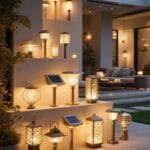

Solar lights represent an innovative solution for outdoor illumination, seamlessly blending sustainability with practicality. These lights convert sunlight into electricity through photovoltaic cells, which are fundamental for their efficiency and overall performance. For peak performance, placement is vital; solar lights require 6-8 hours of direct sunlight daily, necessitating careful positioning away from obstructions like trees or structures. Rechargeable batteries, often NiMH or lithium-ion, store energy, impacting both efficiency and longevity. Regular maintenance, such as cleaning the solar panels and monitoring the battery condition, can enhance functionality and durability. With quality solar panels and consistent sunlight access, users can enjoy effective outdoor lighting for several years, making solar lights a must-have for eco-conscious homeowners. Additionally, considering the impact of weather resistance and durability can further ensure your solar lights perform reliably throughout different seasons.
Factors Affecting Lifespan and Longevity
Numerous factors play an essential role in determining the lifespan and longevity of outdoor lighting solutions. The typical lifespan of solar lights ranges from 2 to 6 years, primarily influenced by solar panels’ quality and the type of rechargeable batteries used. Weather conditions can notably impact durability, as extreme temperatures and moisture lead to corrosion and mold development. To maintain ideal performance, regular cleaning of solar panels is necessary; dirt and debris can obstruct sunlight and hinder charging efficiency. Additionally, durable models made from high-grade materials, with an IP rating of IP65 or higher, are vital. Monitoring battery performance and replacing worn-out batteries, particularly with superior lithium-ion options, will greatly enhance the lifespan and reliability of solar lights. Investing in energy-efficient options can also contribute to extending the life of your outdoor lighting fixtures.
Recommended Products
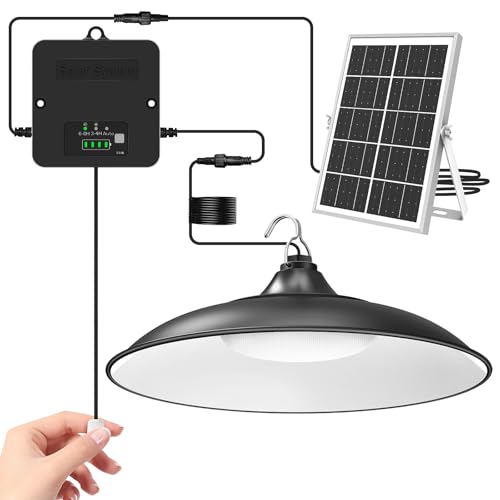
Convenient Power Box: The Power Box contains a battery and is equipped with indicators of battery level and mode. The pull string design eliminates the need for a remote control, ensuring you won’t be left without a way to operate your light if the remote is lost or misplaced. This thoughtful feature makes it easy to monitor and manage your light’s performance
New Tips: We listened to and adopted the needs and suggestions of some customers, and added a metal hanging ring to the solar lights indoor to reduce the tension caused by the light to the cable. Moreover, we provide a 16.4ft extension cord for this solar shed light, and customers who need it can purchase it by themselves.

Works Both Day & Night: Unlike traditional solar light, these solar porch lights are not limited to nighttime use. They can operate both during the day and night, providing a continuous and sustainable lighting solution. Select the all-day working modes when you need lighting in dark shed during the day. Or enjoy convenient operation with the dusk to dawn auto modes. Bring together the beauty of rustic aesthetics and cutting-edge technology for an ambiance that stands out both day and night!
Maintenance and Care for Longer Life
To guarantee ideal performance and longevity of outdoor lighting solutions, diligent maintenance and care are essential. Regularly clean the solar panels to remove dust and debris, which improves sunlight exposure and guarantees peak performance. It is important to periodically inspect for damage, such as cracked lenses or loose connections, to maintain functionality and extend the lifespan of solar lights. Monitoring battery technology, especially high-quality lithium-ion options, will help prevent issues like dimness or failure. Positioning lights to receive direct sunlight for 6 to 8 hours daily maximizes charging efficiency. Additionally, seasonal adjustments, like removing snow or ice from panels, are vital for proper care and guaranteeing the longevity of solar lights amidst varying weather conditions. This attention to solar panel placement ensures optimal performance and enhances the overall lifespan of your outdoor lighting solutions.
Recommended Products

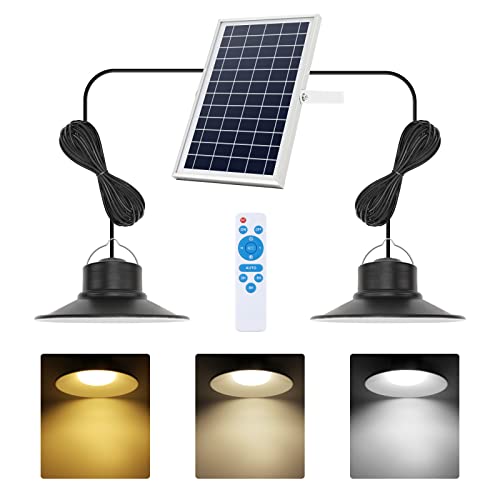
🏡【Be A Good Family Helper】UPONUN solar ceiling light with 2 lamps & dimmable 3 lighting colors, to provide sufficient indoor & outdoor lighting for Home Shed, Barn, Shop, Chicken Coop, Workshop, Storage, Tools Room, Gazebo, Porch, Garage, Cabin, Hallway etc.

CONVENIENT PULL-STRING CONTROL & POWER BOX: Designed with a user-friendly pull string, this solar ceiling fan with light eliminates the frustration of lost remotes. The integrated Power Box features a built-in battery and clear, color-coded LED indicators, making it effortless to monitor your exact working mode and power status at a glance.

Upgraded super bright LED chips independently designed by SANSI:enabling dusk to dawn outdoor lighting to produce up to 3000 lumens at low power of 25 watt. Save more than 80% electricity compared with equivalent traditional halogen bulbs 200 watt. SANSI also uses the world's leading ceramic design to make the heat dissipation reach the first-class level, extendeding service life to 50,000 hours
Enhancing Performance and Efficiency
Maximizing performance and efficiency in outdoor lighting systems requires a strategic approach that encompasses placement, maintenance, and the use of advanced technology. Proper placement of solar lights is essential, ensuring they receive 6-8 hours of direct sun exposure daily to enhance energy absorption. Regular cleaning of solar panels helps improve their efficiency by removing dust and debris, allowing for brighter light output. Utilizing high-quality lithium-ion batteries extends longevity and performance, as these batteries maintain charge better than others. Monitoring and replacing worn-out batteries is vital for ideal functionality. Additionally, incorporating smart technology, like motion sensors, can conserve battery life by managing energy use based on activity, further enhancing outdoor lighting performance and efficiency. Consider choosing solar lights with duel charging options to ensure reliability during cloudy weather conditions.
Recommended Products

【360° Omnidirectional Illumination】Unlike traditional solar lights that only shine downward, our solar shed light features a unique design providing full 360° unobstructed wide-angle lighting, leaving no dark corners in any corner. The solar lights indoor are perfect for shed, garage, barn, gazebo, chicken coop, porch, patio, and more

【5 Lighting Modes with Motion Sensor】This solar shed light has 5 lighting modes. MODE 1: Dim to Bright with motion at night. MODE 2: Off to Bright with motion at night. MODE 3: Constant ON at nighttime. MODE 4: Off to Bright with motion in the Daytime. AUTO: Stays Light All Day, auto turn to MODE 4 when the battery left 50% power. Induction Lighting Delay Time Setting: 25s/35s/45s (Applicable to MODE 1, MODE 2 and MODE 4)

【Dual Control Solar Shed Light with Button & Remote】 Effortlessly control and monitor your solar shed light with the smart power box indicator! This innovative design shows your light’s mode and battery level at a glance. Even if you misplace the remote, you can still control the light with the power box button, or simply rely on the motion sensor to automatically trigger the light when needed. Enjoy full control over your lighting, indoors or outdoors, without any hassle.
Types of Solar Lights for Outdoor Use
As outdoor lighting options expand, selecting the appropriate type of solar light becomes essential for enhancing both functionality and aesthetics. Pathway lights serve to illuminate walkways, requiring 6-8 hours of direct sunlight for ideal performance and safety. In contrast, flood lights provide powerful illumination for larger areas and often include motion sensors to conserve energy. For decorative ambiance during gatherings, string lights are a popular choice, while spotlights focus on specific outdoor features, creating visual interest. Lanterns offer versatile and portable lighting solutions, easily complementing other solar lights. Choosing the right solar lights involves evaluating specific needs, ensuring maximum sunlight absorption and effectiveness while maintaining desired illumination and ambiance in any outdoor space. Furthermore, it’s important to consider weather resistance ratings to guarantee long-lasting performance against outdoor elements.
Installation Guidelines
Choosing the right solar lights is only the beginning; proper installation greatly influences their performance and longevity. Begin by carefully following the installation instructions provided, ensuring that solar panels are positioned at ideal angles for maximum sunlight exposure. For effective outdoor lighting, install pathway lights along walkways while considering their specific functions to enhance usability. Maintain a sufficient distance from artificial lighting, such as street lamps, to prevent interference with the lights’ day-night sensor, ensuring reliable operation. Periodic evaluation of the installation conditions is essential; adjustments may be necessary to maintain continuous ideal performance. By adhering to these guidelines, users can enjoy the full benefits and extended lifespan of their solar lighting investments. Additionally, choosing models with energy efficiency ratings can significantly enhance overall performance and reduce energy costs.
Innovations in Solar Lighting
The landscape of solar lighting continues to evolve, bringing a surge of innovations that enhance both functionality and aesthetic appeal. Recent advancements focus on developing more efficient solar panels that optimize energy efficiency, particularly in low-sunlight conditions. Improved battery life, utilizing high-capacity lithium-ion batteries, allows outdoor solar lights to operate longer, even during overcast nights. Additionally, smart technology integration in modern designs incorporates motion sensors and app connectivity, empowering users to control lighting settings remotely. Moreover, innovations have led to lights with enhanced weather durability, made from high-grade materials that resist corrosion and degradation. These developments create solar lighting solutions that not only promise longevity but also cater to diverse applications, making them essential for contemporary outdoor spaces. High IP ratings are crucial features that ensure these lighting options can withstand various weather conditions while maintaining optimal functionality.
Frequently Asked Questions
Where Should Solar Lights Be Placed Outside?
Solar light placement should prioritize areas like garden pathways for illumination, patio areas for ambiance, driveways for safety, decks for accentuation, and landscape features for spotlighting, while enhancing entranceways, poolside areas, and fence lines effectively.
What Is the 20 Rule for Solar Panels?
The “20 Rule” asserts that solar panels need at least 20% daily direct sunlight for maximum efficiency. Adhering to this guideline enhances solar energy storage, impacts panel orientation positively, and supports renewable energy incentives through improved performance.
What Is the Downside of Solar Lights?
While solar lights offer charming aesthetics, their efficiency often wanes due to limited battery lifespan and weather resistance. Additionally, maintenance requirements impact product reliability, with user reviews frequently highlighting diminished brightness levels and installation costs as concerns.
What Is the Rule of Thumb for Outdoor Lighting?
A general rule of thumb for outdoor lighting emphasizes achieving ideal lighting efficiency by ensuring solar visibility, maintaining design aesthetics, and addressing safety concerns, while considering seasonal adjustments, maintenance practices, and light intensity during installation.