As an Amazon Associate, we earn from qualifying purchases. Some links on this site are affiliate links at no extra cost to you. Our recommendations are based on thorough research and editorial judgment.

Mirror Math: Width, Height, and Sconce Spacing Formulas

To achieve ideal bathroom design, one must consider the formulas for mirror width, height, and sconce spacing. Ideally, sconces should be placed 60 to 65 inches tall, with a quarter-inch gap from the mirror edges for safety. Mirrors should match vanity width minus twice the desired side clearance. Proportional adjustments might be necessary for varied ceiling heights or fixture styles. Moreover, thoughtful fixture coordination enhances both function and aesthetics in the space, leading to a well-balanced environment. Explore these essential concepts further.
Key Takeaways
- Mirror Width Calculation: The width of the mirror should equal the vanity width minus twice the desired 2 to 6 inches of side clearance.
- Ideal Sconce Height: Mount sconces between 60 to 65 inches from the floor for optimal lighting and visual balance around mirrors.
- Sconce Spacing: Maintain a quarter-inch gap between sconces and the mirror edges to ensure safety and aesthetics.
- Double Sink Setup: For double sinks, the mirror width should include surrounding counter space for adequate sconce placement and functionality.
- Ceiling Height Adjustment: Increase sconce height if ceilings exceed 10 feet to maintain visual proportion with mirror and other architectural features.
Ideal Height for Bathroom Sconces
When designing a bathroom, the placement of sconces can considerably enhance the space’s functionality and aesthetics. The ideal height for sconces typically ranges from 60 to 65 inches from the finished floor, ensuring that illumination occurs at eye level. For bathrooms with ceiling heights of 9 or 10 feet, it is advisable to mount sconces higher to maintain balance with architectural features. Side-mounted sconces provide maximum light, effectively minimizing shadows when positioned near mirrors or vanities. If opting for over-mirror lighting, install sconces 6 to 8 inches above the mirror, resulting in a height range of 75 to 80 inches based on ceiling height. By adhering to these guidelines, one can achieve a harmonious balance of light and aesthetics, enhancing overall bathroom design. Additionally, using durability and moisture-resistant materials in lighting fixtures will contribute to the longevity and performance of your bathroom sconces.
Recommended Products

AUGUSTA CEILING FAN WITH LIGHT: 4-4 Watt Integrated Dimmable LED Light Kit (3000K, 80 CRI, 300 Lumens), 16 Total Watts

【Premium Version】: The indoor brass wall sconce adopts a brass finish, with a copper-colored textured lamp body and a transparent clear glass lampshade. The optimized version adds more than just an elegant touch. This sophisticated wall sconces set of two fits a variety of decorating styles, making it the perfect choice to enhance your home's lighting. Comes with 2 glass shades 10" long and 10" diameter.

Each is 19 1/4" high x 5" wide. Extends 6 1/2" from the wall. Backplate is 5" wide. Shade is 7" high x 5" wide. Weighs 1.1 lbs.
Adapting Sconce Height to User and Space Needs
To create a welcoming and functional bathroom space, the height of sconces must be thoughtfully adjusted to accommodate diverse user needs and room dimensions. Standard sconce height ranges from 60 to 65 inches from the finished floor, allowing for even illumination at eye level. However, in bathrooms with taller ceilings, like 10 feet, sconces should be mounted higher to maintain visual coherence. Shared bathrooms require additional consideration; adjusting sconce height guarantees comfort for various users. Furthermore, when planning placement, the dimensions of mirrors and vanities should harmonize with the lighting elements. If existing electrical boxes are involved, prioritize safety regulations and proper alignment, adapting the installation to achieve the best lighting without compromising the room’s aesthetic balance. Choosing a design with adjustable color temperature can also enhance the functionality of the lighting in different scenarios.
Balancing Light Placement With Mirror and Vanity Proportions
Achieving a harmonious balance between light placement and the proportions of mirrors and vanities is essential for a well-designed bathroom. For effective sconce placement, the width of the mirror must accommodate 2 to 6 inches of side clearance on a 13 feet 6 inches vanity. Ideally, sconces should be mounted 60-65 inches from the finished floor, ensuring balanced lighting around the mirror. If ceiling height is 10 feet, height adjustments may be necessary to maintain visual cohesion. Side-mounted sconces offer balanced lighting when placed at eye level, while over-mirror lighting should be positioned 6-8 inches above the mirror. When dealing with double sinks, the total mirror width should include surrounding counter space to prevent obstruction and enhance functionality. Incorporating energy-efficient lighting can help create a brighter and more inviting space while also reducing electricity costs.
Recommended Products
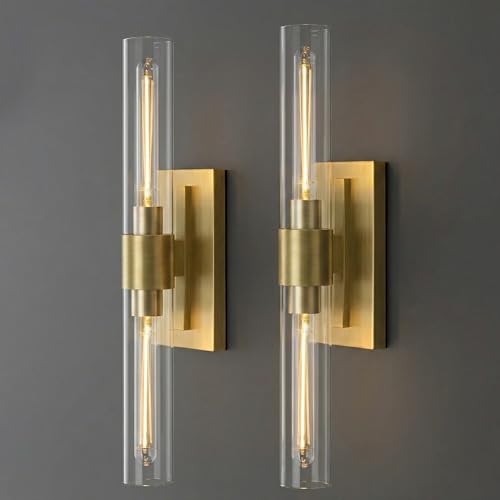
TWO INSTALLATION METHODS: Thanks to the tubular clear glass shade, the gold wall sconce's bulb illumination range is up to 350°. During the installation of the bathroom wall sconce, you can install the bathroom vanity light horizontally above the mirror or vertically to the left and right of the mirror.

EXQUISITE DESIGN AND PREMIUM MATERIAL:This bathroom vanity lights wall sconce combines a highly transparent hard glass with a solid copper base and a knurled texture shade, offering exquisite craftsmanship and a soft diffusion of light that enhances the elegance and luxury of any space.

[MODERN LED DESIGN] The 6-light modern vanity light showcases a contemporary design, featuring classic oil rubbed bronze finish that instantly upgrades your bathroom or powder room. This bathroom light's 6 rectangular acrylic lenses emit a bright glow, making it a prime choice among interior designers and builders. The integrated LEDs keep energy costs low and can be mounted upwards or downwards for your convenience
Exploring Style, Fixture Type, and Light Direction
Exploring style, fixture type, and light direction significantly influences the overall ambiance and functionality of a bathroom space. The ideal mirror width should range from 2 to 6 inches inside the vanity edges, promoting balance and aesthetic appeal. In a double sink vanity, the mirrors must span the width of the sinks, ensuring a harmonious look. Correct height positioning is vital; the bottom edge should sit above the faucet, with the center around 60 inches from the floor. Sconces, strategically mounted between 60 to 65 inches from the finished floor, provide flattering illumination without harsh shadows. When using multiple fixtures, it is essential to space them evenly for best light distribution and visual harmony, enhancing the bathroom’s overall design. Additionally, selecting sconces with multiple brightness levels can further enhance the functionality of the space, allowing for customized illumination tailored to different needs.
Recommended Products

1: [APPLICATION]: 66inch Black Bathroom Vanity Light 10-Lights . Modern and simple style design, suitable for your bathroom, mirror cabinets, powder room, bedroom and living room etc. The brightness is perfect for putting on makeup.

TRANSFORMATIVE ELEGANCE: Experience the stunning visual impact of the 22.8-inch black glass vanity light, instantly elevating your bathroom into a modern sanctuary with its sleek design and warm-toned bulbs. Crafted from high-quality copper material, this fixture not only looks exquisite but also feels solid and durable, ensuring it will be a beautiful and lasting addition to your home.

Exquisite Knurled Texture: Contrasting textures are the hallmark of designer brass knurled fixtures. Each piece is engraved with an intricate diamond pattern, an industrial detail that adds a subtle decorative touch. The solid brass material adds to the elegance and beauty of the wall sconce.
Installation Constraints and Electrical Planning
Installation of mirrors and sconces requires careful planning and reflection to ascertain functionality and aesthetic appeal. The standard height for electrical box placement is typically 60 inches from the floor; however, adjustments may be needed based on the mirror and sconce design for ideal visual alignment. In new constructions, effective electrical planning facilitates perfect sconce height placements while adhering to safety standards. It is essential to evaluate whether a two or three mirror configuration is planned, as this may necessitate changes to electrical box placement, particularly to avoid obstruction by central sconces. Additionally, installing Ground Fault Interrupters (GFIs) in side splash areas enhances both visual interest and electrical safety in moisture-prone environments, ensuring compliance with the National Electrical Code (NEC). Incorporating modern vanity lights with customizable brightness can further enhance the overall lighting experience in your bathroom space.
How to Use the Bathroom Mirror Size Calculator
How can one determine the ideal dimensions for a bathroom mirror? To achieve the perfect fit, first calculate the mirror width by subtracting twice the desired side clearance from the vanity width. For mirror height, subtract the counter height, faucet clearance, and lighting clearance from the ceiling height. This guarantees that the mirror height and width not only fit the space but also enhance aesthetic balance. In double sink setups, verify the mirror width accommodates the sink width plus any extra counter space. Remember to maintain a quarter-inch gap between the mirror and backsplash for proper installation and to prevent moisture damage. These calculations will guide you toward creating a visually appealing bathroom environment with best functionality. Additionally, selecting an LED mirror with adjustable brightness and color temperature can further enhance the utility and ambiance of your bathroom.
Recommended Products
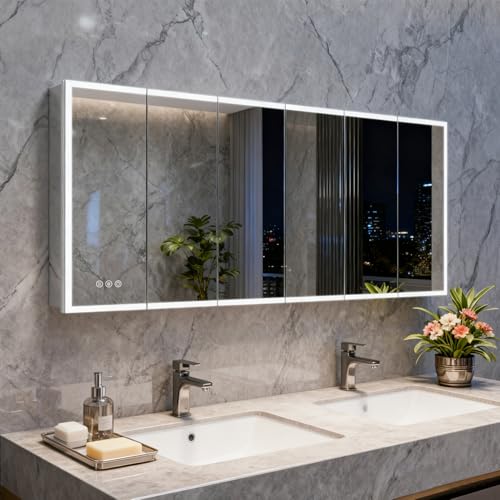
Adjustable Illumination Features: GUIQIYANG Medicine cabinet is equipped with customizable light intensity, enabling you to create the ideal ambiance for any hour of the day. Select from three distinct color temperatures—cool white, natural white, and warm yellow—allowing you to fine-tune your lighting to meet your preferences.

Anti-Fog Technology: Never worry about foggy mirrors again! Our 96x40 bathroom mirror cabinet features anti-fog tech that keeps the mirror clear even after hot showers, delivering reliable clarity for your daily routine
Adjustable Smart Lighting: Select from cool white, natural, and warm yellow light colors with 10 brightness levels to match your activity and set the right mood.
Formula for Mirror Width and Height Calculation
Determining the perfect dimensions for a bathroom mirror requires precise calculations to enhance both functionality and aesthetics. To achieve the ideal width, the formula involves subtracting twice the side clearance from the vanity width, ensuring a snug fit that complements the space. For height, the equation is ceiling height minus counter height, faucet clearance, and lighting clearance, facilitating adequate fixture space. For single mirrors, an ideal width ranging from 2 to 6 inches inside the vanity edges provides balance. In double sink scenarios, mirrors should extend across the sinks and surrounding countertop for cohesive design. Additionally, a bottom edge height should rest above the faucet while centering the mirror around 60 inches for prime visual alignment, ensuring a harmonious and practical installation. Consider incorporating LED technology to maximize energy efficiency and enhance the overall lighting experience in your bathroom.
Importance of Well-Proportioned Mirrors
Well-proportioned mirrors are essential in a bathroom, as they not only enhance the overall aesthetic but also improve functionality. By harmonizing with a 13-foot 6-inch vanity width, well-proportioned mirrors create a balanced visual effect that is visually appealing and practical. The mirror’s height must consider the ceiling, counter height, and necessary clearances for faucets and lighting to guarantee clear visibility. Furthermore, side-mounted sconces, when installed 60 to 65 inches from the floor, should seamlessly complement the mirror’s proportions, minimizing harsh shadows. Maintaining a quarter-inch gap between the mirror and backsplash not only elevates the design but also aids moisture management. Together, these elements create a cohesive and sophisticated bathroom space that is both functional and stylish. Additionally, selecting sconces made from durable materials ensures they can withstand the bathroom’s unique environment while enhancing the overall design.
Tips for Sconce Spacing and Installation
In the pursuit of creating an inviting and functional bathroom space, thoughtful sconce spacing and installation play an important role. Sconces should ideally be mounted 60-65 inches from the finished floor, aligning with eye level for balanced lighting, effectively minimizing shadows. In spaces with tall ceilings, sconces can be positioned slightly higher, while lower ceilings benefit from streamlined designs to enhance openness. It is vital to adjust sconce placement based on the size of mirrors and vanities, often utilizing side-mounted sconces to achieve harmonious lighting distribution. Additionally, aligning sconces with architectural elements and maintaining a quarter-inch gap between them and mirror edges guarantees both aesthetic appeal and compliance with safety standards. Considering dimmable options for your sconces can enhance versatility and allow for mood setting in your space.
Recommended Products

Knurled Grand Wall Sconce: This wall sconce is made of high clarity hard glass and solid copper base for soft light diffusion. The vintage texture of the body and the handmade shade look simple and elegant, Each piece is incised with a complex diamond pattern, an industrial detail that adds a subtle decorative effect, yet maintains for you a unique Industrial feel, this wall sconce will bring more sophistication and luxury to your home lighting.

Unique design: this wall light is made of highly transparent hard glass and a brass metal lamp body with 2 glass shades 10 inches long and 2.5 inches in diameter, which allows for a softer diffusion of light. This wall light will bring added sophistication and luxury to the lighting of your home.
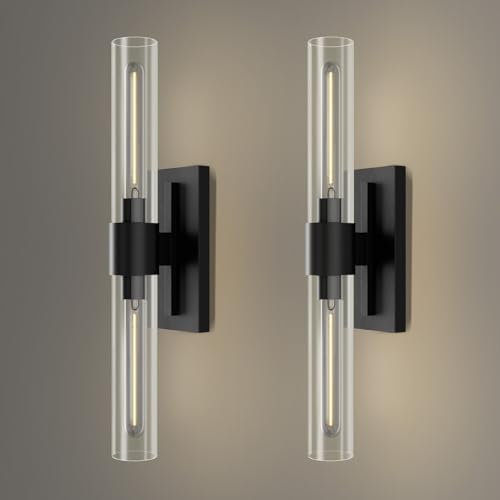
【Premium Materials】: The base of this black wall sconce set of two with clear glass shade is all made of high quality copper, which doesn't shed paint and is not easy to rust and fade. The lampshade is made of thickened high clear hard glass shade, durable and unbreakable. Each shade is 10 inches long and 2.5 inches in diameter for a brighter, even and softer light.
Elevating Aesthetics With Proper Fixture Coordination
To elevate the overall aesthetics of a bathroom, the coordination between sconces and mirrors is vital, as it greatly influences both functionality and style. Sconces should ideally be installed at a height of 60-65 inches from the finished floor, ensuring balanced illumination. When selecting mirrors, the width should be the vanity width minus twice the desired side clearance, fostering a cohesive look. For the best lighting, sconces positioned at eye level reduce harsh shadows while enhancing the ambient glow of mirrors. Aligning sconces at 6-8 inches above the mirror’s top edge achieves aesthetic harmony. Additionally, considering the proportions and designs of both sconces and mirrors is important, as this alignment must complement the overall bathroom style and layout effectively. Incorporating dimmable lighting options can greatly enhance the grooming experience by allowing for customizable brightness levels.
Frequently Asked Questions
How Much Space Between Mirror and Sconce?
A spacing of 2 to 6 inches between the mirror and sconce is recommended to achieve proper mirror alignment. Sconce height should be set at 60 to 65 inches for ideal light distribution and aesthetic appeal.
What Is the Formula of the Mirror Equation?
In the domain of reflections, the mirror equation intertwines mirror properties with image distance, expressed as 1/f = 1/d_o + 1/d_i. This elegant formula reveals the intimate dance between object and mirror.
What Is the Formula for the Height of a Mirror?
The formula for the height of a mirror involves subtracting counter height, faucet clearance, and lighting clearance from the ceiling height, ensuring ideal reflective properties while accommodating mirror dimensions and user functionality in design.
What Is the Formula for the Mirror Maker?
The formula for the mirror maker involves determining ideal mirror dimensions based on space requirements, taking into account reflective surfaces for enhanced light and visibility. Precision in sizing guarantees aesthetic appeal and functional effectiveness in design.