As an Amazon Associate, we earn from qualifying purchases. Some links on this site are affiliate links at no extra cost to you. Our recommendations are based on thorough research and editorial judgment.

Lumens Vs Watts: How Bright Should Each Room Be?

Understanding lumens versus watts is essential for effective room lighting. Lumens measure brightness, while watts indicate energy consumption. A living room requires about 1,500 to 3,000 lumens for comfort, while kitchens need 3,000 to 4,000 lumens for tasks. Bedrooms benefit from 1,000 to 2,000 lumens, and bathrooms require 2,000 to 4,000 lumens. By calculating total lumens based on room size and using suitable wattage, homeowners can achieve ideal light levels efficiently. Continue exploring to discover specific techniques and recommendations.
Key Takeaways
- Lumens measure brightness; aim for 1,500-3,000 lumens in living rooms for comfort and ambiance.
- Kitchens should have 3,000-4,000 lumens to ensure proper visibility for cooking and tasks.
- Bedrooms require 1,000-2,000 lumens for a restful environment conducive to sleep.
- Bathrooms benefit from 2,000-4,000 lumens to provide adequate lighting during grooming routines.
- Home offices need 3,000-6,000 lumens to promote productivity and focus while working.
Understanding Lumens and Watts
You may be interested



When considering lighting options, one must understand the distinction between lumens and watts, as these measurements serve different purposes in evaluating light quality. Lumens measure the amount of visible light emitted by light bulbs, providing a true representation of brightness, unlike watts, which indicate power consumption. For instance, a typical 60-watt incandescent bulb delivers around 800 lumens, while an energy-efficient LED provides similar brightness using only about 10 watts. Therefore, making proper lighting choices requires a focus on lumens for ideal lighting. Higher wattage does not guarantee increased brightness, especially with advanced technologies. Understanding lumen levels facilitates informed decisions about lighting output in various spaces, ultimately maximizing energy efficiency while ensuring adequate illumination for each room’s specific needs. Many modern LED solutions like motion sensor technology offer adjustable brightness and color temperatures, enhancing both functionality and ambiance in your lighting setup.
General Lumen Requirements for Different Rooms
Understanding the appropriate lumen requirements for various rooms plays an essential role in achieving the desired ambiance and functionality in a home. Living rooms typically require between 1,500 to 3,000 lumens, creating a comfortable space for relaxation and socializing. In contrast, kitchens demand higher illumination, ideally reaching 3,000 to 4,000 lumens, to guarantee effective task execution. Bedrooms benefit from softer lighting, aiming for 1,000 to 2,000 lumens to promote restful sleep. Meanwhile, bathrooms should provide 2,000 to 4,000 lumens for adequate visibility during grooming. Home offices require robust lighting levels, ranging from 3,000 to 6,000 lumens, to enhance productivity and minimize eye strain. Selecting the right light fixture guarantees peak brightness levels while considering energy consumption. Additionally, understanding energy efficiency in lighting can help maximize savings on electricity costs while maintaining adequate illumination levels.
Calculating Total Lumens Needed for Your Space
Calculating the total lumens needed for a space is vital for achieving ideal lighting that enhances both functionality and ambiance. To determine the requisite lumens, one must multiply the room size in square feet by the recommended foot-candle level, typically 20 foot-candles. For instance, a 100 square foot room requires 2,000 lumens, derived from 100 sq ft multiplied by 20 foot-candles. Homes with varied uses may need more, especially kitchens, which require 3,000 to 4,000 lumens for effective task lighting. Always consider personal preferences; increasing the calculated total lumens by 10-20% can yield a brighter environment. This thoughtful approach guarantees that every room’s lighting aligns with its purpose while creating a welcoming atmosphere. Additionally, proper lighting selection, such as fairy lights for weddings, can greatly enhance the ambiance of specific spaces.
Factors Influencing Your Lighting Needs
Lighting needs in any space are influenced by various critical factors, each shaping the overall effectiveness of illumination. The lumens per square foot required increases with room size; for example, a 100 sq ft area typically needs around 2,000 lumens. Ceiling height also matters, as taller ceilings may necessitate higher lumen outputs due to light spreading over larger areas. Additionally, wall color influences perceived brightness; darker shades absorb more light, often requiring an increased amount of lumens. Room usage defines specific lighting requirements; kitchens generally need 3,000 to 4,000 lumens, while bedrooms may only require 1,000 to 2,000. Finally, personal preference plays a role, as individuals might opt for 10-20% more lumens for comfort using efficient light sources like LED bulbs. Bathroom lighting options, such as the 3-Light LED Bathroom Vanity Fixture, can significantly enhance overall brightness while providing energy efficiency.
Recommended Color Temperatures by Room
Choosing the right color temperature for each room can greatly enhance its functionality and ambiance. In living rooms, a warm color temperature between 2,000K and 4,000K is ideal, promoting relaxation. Kitchens and dining rooms benefit from brighter illumination in the 3,000K to 4,500K range, ensuring clarity for cooking tasks. For bedrooms, softer tones of 2,000K to 3,000K create a calming environment conducive to sleep. Bathrooms should incorporate color temperatures around 3,000K to 4,000K, providing sufficient light for grooming without harsh shadows. Finally, home offices thrive under cooler light temperatures of 4,500K to 5,000K, fostering focus and productivity. Utilizing appropriate LED bulbs and lighting fixtures enhances the overall light quality and effectiveness in each space. Additionally, selecting dimmable fixtures can allow for a customizable ambiance, which is particularly beneficial in versatile areas like bathrooms.
Recommended Products
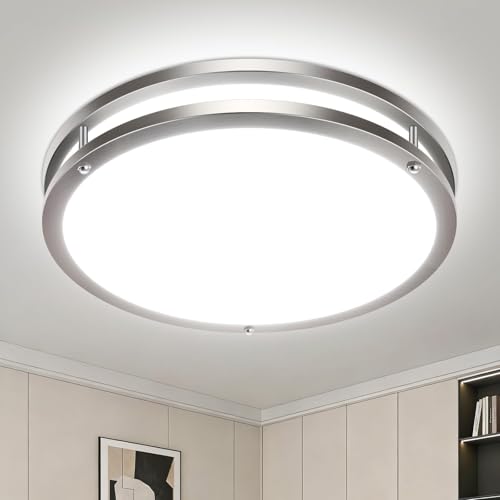
【Upgraded Design for Easy Installation】Our enhanced design makes installation a breeze! Follow the clear instructions in the manual to complete setup in just minutes. No special tools are required—only basic household tools. Enjoy hassle-free installation that anyone can manage, regardless of DIY skills

Sleek Modern Design: This contemporary flush mount ceiling light features a low-profile housing that sits neatly against the ceiling, ensuring smooth clearance for closet doors. Its durable metal frame comes in a brushed nickel finish, paired with a white plastic diffuser that evenly distributes bright, shadow-free illumination.
Choosing the Right LED Bulbs
Choosing the right LED bulbs is essential for achieving desired brightness while conserving energy. Rather than focusing on wattage, one should prioritize lumen count, especially for various light fixtures across different rooms. In living rooms, select LED bulbs that collectively offer 1,500 to 3,000 lumens for a welcoming atmosphere. For kitchen lighting, opt for bulbs that generate 3,000 to 4,000 lumens to enhance functionality during meal preparation. In bedrooms, aim for LED bulbs emitting 1,000 to 2,000 lumens, creating a soothing environment for relaxation. Such considerations guarantee that spaces are adequately illuminated while embracing energy-efficient solutions for modern living without resorting to dim lighting or excessive power usage. Additionally, ensure that the selected bulbs have a high Color Rendering Index (CRI) for better color accuracy and visual comfort.
Recommended Products

3CCT Selectable Color Temperature: Select your preferred color temperature via the toggle switch on the fixture before mounting. Three preset tones are available: 3000K Bright White, 4000K Cool White, and 5000K Daylight. This fixture requires hardwiring to a standard ceiling J-Box (sold separately). Once installed, it works only with a regular ON/OFF wall switch for basic on/off control. Recommended for flat ceilings with pre-installed junction boxes.

【Ultra Thin Design - Fits Perfectly to Ceilings】Our led ceiling light flush mount are only 0.94 inches thick, perfect for rooms with low ceilings. The simple and modern rounded design blends perfectly with any interior style and is perfect for bathrooms, hallways, bedrooms, closet, children's rooms, porch, etc
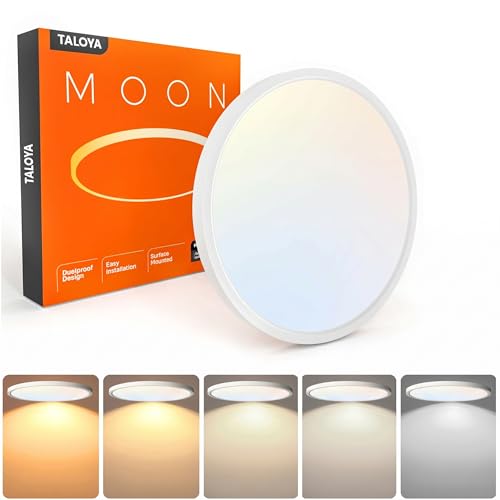
Why Taloya?【Advantage 1- The most convenient installation】: Spare three minutes to log into Youtube, and input “Taloya Ceiling Light-C2” in the search to watch the whole easy installation video. DIY friendly.【Warm Tips】: This product only works with regular ON/OFF wall switch as shown in the advertised pictures.
Tips for Layering Light Effectively
Effective illumination in a home can be achieved by thoughtfully layering light, which combines ambient, task, and accent lighting to meet the diverse needs of each room. Ambient lighting forms the foundation, ensuring a consistent lumen level in living areas while creating a welcoming environment. Task lighting, essential for activities like reading or cooking, requires focused brightness, often achieved with specific bulbs and fixtures. Accent lighting adds character, highlighting décor features without overshadowing primary light sources. To enhance light intensity, use dimmer switches, allowing homeowners to adjust brightness according to the time of day or mood. For ideal comfort, aim for 1,500 to 3,000 lumens in living rooms and up to 4,000 in kitchens. Additionally, incorporating energy-efficient LED bulbs can significantly reduce electricity costs while providing optimal brightness and safety.
Recommended Products

[Design & Concept]: DIDUIO ceiling light fixtures is the new upgraded 2nd generation product, size: 18.9'' L x 18.9''W x 7.33'' H (Bulbs Not Included), with classic matte black metal & transparent glass cover design, increasing the brightness by 50%, light fixtures ceiling mount solving the difficulty of insufficient brightness, perfectly interpreting the combination of vintage and modern design style.

Modern Design Ceiling Light: Add a touch of beauty to your living space with the Bargeni light fixture. The flush mount ceiling light features a black finish with white fabric shade that blends seamlessly with most decor styles. Bargeni kitchen light fixtures can make a difference to your home,creating a cozy atmosphere. The ceiling lighting is perfect for nearly any space such as bedroom, entryway, living room, hallway, bathroom, kitchen,dining room, etc

Modern Farmhouse: The iron frame, matte black finish and clear glass shades of the ceiling light combine to create a modern farmhouse design.
Frequently Asked Questions
How Many Lumens Is Bright Enough for a Room?
For ideal room illumination, brightness levels should hover between 1,000 to 6,000 lumens, depending on purpose. Living rooms thrive in ambient light while kitchens require bright task lighting; consider LED options to enhance color temperature and efficiency.
How Many Watts to Make a Room Brighter?
To achieve ideal room lighting, wattage should match room size and brightness levels, considering fixture types and dimming options. Energy efficiency through LED bulbs enhances color rendering while allowing for mood lighting and effective light layering.
What Is More Important, Lumens or Watts?
Lumens are more important than watts, as brightness perception directly affects room function. Energy efficiency is enhanced through proper bulb types, taking into account light temperature, color rendering, and features like dimming options for sustainable decorative and task lighting.
Is 800 Lumens Too Bright for a Bedroom?
In a serene space dedicated to sleep, 800 lumens may seem suffocating. However, personal preferences dictate the delicate balance of mood lighting, as color temperature and task lighting can enhance sleep quality while maintaining energy efficiency.