As an Amazon Associate, we earn from qualifying purchases. Some links on this site are affiliate links at no extra cost to you. Our recommendations are based on thorough research and editorial judgment.

Layered Lighting 101: Ambient, Task, and Accent Explained

Layered lighting is essential for crafting inviting spaces, achieved by integrating ambient, task, and accent lighting. Ambient lighting serves as the foundation, providing overall illumination. Task lighting focuses on specific activities, like reading or cooking, while accent lighting highlights art or architectural features. Using the correct fixtures, color temperatures, and placing them strategically helps avoid shadows and enhances comfort. It’s important to understand these components, as they work together harmoniously to transform any room into a well-lit haven. More insights await.
Key Takeaways
- Layered lighting combines ambient, task, and accent lights to create a balanced and inviting environment.
- Ambient lighting forms the foundation with essential illumination, typically providing 1,500 to 3,000 lumens for comfort.
- Task lighting focuses on specific activities, delivering concentrated brightness of 350 to 500 lumens for effective functionality.
- Accent lighting enhances visual interest by highlighting features, making them appear three times brighter than ambient light.
- Avoid common mistakes like relying on a single fixture or neglecting dimmers, which limit adaptability and effectiveness in lighting design.
The Importance of Layering Lighting
You may be interested
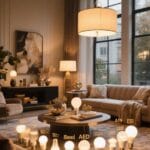

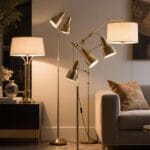
Layering lighting is essential for creating a harmonious and inviting environment, as it combines various light sources to elevate the aesthetic of any room. By employing ambient lighting, task lighting, and accent lighting, one can achieve a balanced design that enhances overall illumination. This method removes unflattering shadows while fostering comfort, making it a crucial aspect of interior décor. Designers recommend utilizing three to five different fixtures, strategically placed to avoid flat lighting conditions. Adjustable lighting, such as dimmers, adds further flexibility, allowing occupants to modify the atmosphere throughout the day. The careful arrangement of layered lighting not only highlights specific areas but also creates a visually appealing dynamic that transforms any space into an inviting oasis. Choosing fixtures that are energy-efficient designs can further enhance comfort and sustainability in your lighting scheme.
Understanding Ambient Lighting
Effective ambient lighting serves as the backbone for any well-designed space, providing essential illumination that brings a room to life. This type of general lighting, often derived from ceiling fixtures like chandeliers and recessed lights, establishes a foundational glow throughout the area. For living rooms, achieving ideal lumens between 1,500 and 3,000 guarantees comfortable brightness and visibility. Selecting a color temperature between 2700K to 3000K enhances a cozy ambiance, making the space inviting and warm. Designers often recommend incorporating dimmable ambient lighting options, allowing homeowners to adjust brightness according to varying needs throughout the day. By thoughtfully integrating ambient lighting, one can achieve harmonious overall illumination, elevating the overall design and functionality of the room. Additionally, implementing LED lights can offer significant energy savings compared to traditional incandescent options.
Recommended Products

Unprecedented Ultra-thin Ceiling Lights - We've used cutting-edge raw materials renowned for their flexibility and strength to create this incredibly slim round led light, measuring just 0.67 inches thick. This design surpasses the thickness limitations of traditional lights for ceiling. Regardless of your ceiling height, it seamlessly integrates into your home decor, adding a modern and stylish allure
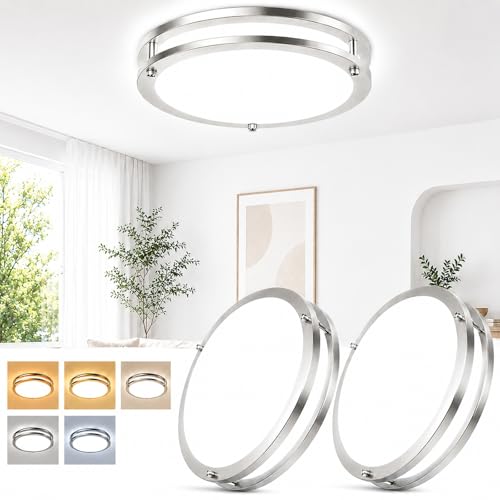
【Brightness That Actually Works for Real Rooms】“How bright is this light?” — Most 13 inch LED ceiling lights deliver only 1300–2400 lumens. Ours delivers 3600 lumens at 36W, bright enough for bedrooms, kitchens, hallways, garages, basements, and home offices up to 250 sq ft. Enjoy fewer shadows, fewer dim corners, and up to 90% energy savings vs. traditional bulbs.
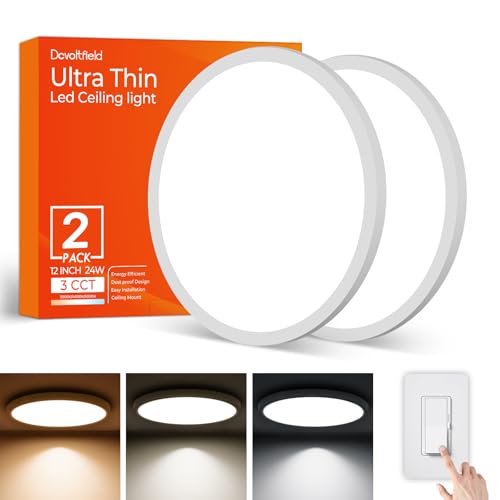
【5%-100% Dimmable via Wall Switch】 This LED ceiling light offers smooth dimming from 5% to 100% using your wall switch. Compatible with most dimmers, it adapts to your every lighting need—whether you want a soft glow for relaxing, or bright light for work or reading. Easily adjust to create the ideal ambiance with just a simple flick of your switch. Suitable for resting, reading, working, watching football matches, and other similar activities
Exploring Task Lighting
Task lighting is essential for illuminating specific work areas, ensuring individuals can engage in activities such as reading, cooking, or grooming with ease. Effective task lights, like table lamps, desk lamps, and under-cabinet lighting, provide direct and intense illumination, typically requiring between 350 to 500 lumens. This level of brightness minimizes eye strain while enhancing focus on tasks. Additionally, adjustable task lighting is vital for eliminating shadows and directing light exactly where it’s needed, particularly in kitchens and workstations. When selecting task lighting, consider fixtures that complement the decor style of the room, ensuring functional fixtures seamlessly blend with the overall aesthetic. This thoughtful approach allows for functionality and visual harmony within the space. Moreover, models with dimmable options enhance versatility, enabling users to customize brightness levels according to specific needs and preferences.
Recommended Products

Experience guilt-free energy efficiency with these led cabinet lights, offering wide area light distribution to elevate the ambiance of closet spaces

21 Selectable CCT: Choose from 2700K, 3000K, 3500K, 4000K, and 5000K to suit any mood or setting. With a 90 CRI, R9 over 50 rating, and polycarbonate diffuser, our wired under cabinet lighting provides accurate colors and uniform lighting.

24-INCH PLUG-IN LED LIGHT BAR — Delivers 1,561 lumens of fully diffused illumination in a slim modern design; ideal under-cabinet lighting for kitchens, offices and workspaces; ETL safety certified
The Role of Accent Lighting
Accent lighting acts as a transformative element in interior design, enhancing the visual allure of a room while drawing attention to specific features and details. This decorative layer serves to highlight artworks and architectural details, making these elements approximately three times brighter than ambient light. Common types of accent lighting include wall sconces, track lighting, and recessed spotlights, which help create focal points within a space. By diminishing gloom in darker areas, accent lighting markedly contributes to overall visual appeal and comfort, adding depth and drama to the environment. Employ adjustable fittings to achieve precision focusing, effectively showcasing favorite objects and features. Incorporating accent lighting is essential for creating vibrant, engaging spaces that resonate with impactful aesthetics, especially when combined with dimmable LED replacements that allow customizable brightness.
Recommended Products

50W Halogen Equivalent at a Fraction of the Energy – Replace your outdated 50W halogen GU10 bulbs with these energy-efficient 6W LED spotlights. Deliver the same 580 lumens of bright, warm light while cutting energy consumption by over 85%. Perfect for high-use areas where efficiency and lower electricity bills matter.

➣PERFECT ACCENT LIGHTING: With standard GU5.3 base, Linkind MR16 LED dimmable light bulbs emit focused spot light with 40 degree beam angle to better accentuate the items. Ideal for track lighting, landscape lighting, recessed lighting and spotlight in the house, office, gallery, museum, store, restaurant etc.

RELIABLE & STYLISH FLOOR CAN LIGHT - All components are UL certified, including lamp holder, cable and switch, safe and durable. Black metal construction, 8" high × 3.5" wide beveled cylindrical shape give the uplights fashion and art, perfect for indoor accent lighting.
Integrating Lighting for Style and Function
Integrating lighting for style and function requires a thoughtful approach to guarantee that each layer serves its purpose while contributing to the overall aesthetic. Layered lighting combines ambient, task, and accent lighting to create a versatile environment that enhances both appearance and usability. Ambient lighting, typically sourced from overhead fixtures, establishes the foundational brightness of a room, while dimmable options set the mood. Task lighting focuses intense illumination on work areas, improving visibility for activities like reading or cooking. Accent lighting highlights design features, such as artwork, using brightness levels three times greater than ambient light. By effectively integrating these elements, one can enhance both the functionality and visual impact of the space, making design decisions more impactful and rewarding. Additionally, incorporating solar mushroom lights can add charm and ambiance to outdoor spaces, enhancing the layered lighting effect beyond just indoor environments.
Recommended Products

Modern Minimalism Design & Wide Applications: The modern mid-century LED ceiling light fixture features a matte black metal exterior lampshade with a champagne gold interior, and is combined with an LED panel light source. A vintage and classical look adds an antique and retro vibe to your cozy space. 12-inch diameter dimmable LED flush mount ceiling light is compatible with most household and commercial areas, and which ideal for hallways, bathrooms, kitchens, closets, stairwells, bedrooms, living rooms, corridors, entrances, porches, mud rooms, children's rooms, dining rooms, bars, cafes, offices, hotels, and restaurants.

Unique Design: The kitchen flush mount ceiling light size is 11.8 in X 4.7 in. The ceiling lights are made of metal and acrylic. The modern design adds a eleglant touch, making it a stunning and stylish

Modern Design Ceiling Light: Add a touch of beauty to your living space with the Bargeni light fixture. The flush mount ceiling light features a black finish with white fabric shade that blends seamlessly with most decor styles. Bargeni kitchen light fixtures can make a difference to your home,creating a cozy atmosphere. The ceiling lighting is perfect for nearly any space such as bedroom, entryway, living room, hallway, bathroom, kitchen,dining room, etc
Common Mistakes to Avoid in Lighting Design
When designed carelessly, lighting can quickly undermine the overall aesthetic and functionality of a space. Relying solely on a single main light source often results in a flat environment, lacking the richness of layered lighting. In addition, selecting lighting fixtures after other design elements usually leads to mismatched styles, disrupting the room’s harmony. Underestimating bulb color temperature can dramatically change the mood and appearance of finishes, affecting overall aesthetics. Furthermore, omitting dimmers restricts versatility, eliminating customized brightness for various activities. Finally, failing to guarantee strategic placement and proper zoning may create unwanted shadows and poorly lit spots, hampering both task and accent lighting. By avoiding these common mistakes, designers can enhance both form and function in any space. Incorporating energy-efficient options can also improve overall lighting performance while helping to reduce electricity costs.
Tips for Selecting the Right Lighting Fixtures
Selecting the right lighting fixtures is essential for achieving a well-designed space that meets both aesthetic and functional needs. Consider the purpose of the area when choosing between ambient, task, or accent lighting. Ambient lighting should provide 1,500 to 3,000 lumens, while task lighting requires 350 to 500 lumens, and accent lighting should be three times brighter than ambient lights. The color temperature of bulbs, ideally between 2700K to 3000K, influences mood and comfort. Choose fixtures that harmonize with the room’s decor style and guarantee they serve their intended purpose. Prioritize adjustable fixtures for task and accent lighting, allowing flexibility in brightness, focus, and adaptability for specific tasks or activities. This layered lighting approach creates depth and functionality. To enhance energy efficiency, consider selecting energy-efficient LEDs that save up to 80% on electricity.
Recommended Products

Mid-Century Modern Design: This white semi flush mount ceiling light features a frosted glass shade and a brushed brass metal base. The open shade design makes it easier to clean and change bulbs

Mid-Century style design: This stylish mid-century LED ceiling light adds a touch of elegance to any space with its simple, flowing lines and bright light. Whether used in a living room or office, this light fixture blends perfectly with a variety of decorative styles.

Elegant Design:The semi flush mount ceiling light blend classic elegance with modern decor, featuring a distinctive two-layer shade that adds a touch of modern and farmhouse charm while enhancing lighting effects.They are an ideal choice for enhancing your home's overhead lighting decor.
Frequently Asked Questions
What Is Ambient Task and Accent Lighting?
Ninety percent of an interior’s ambiance stems from lighting. Ambient lighting examples include ceiling fixtures; task lighting solutions like adjustable lamps enhance functionality, while accent lighting techniques showcase art, creating mood-setting layers that improve visual aesthetics and comfort.
What Does Layered Lighting Mean?
Layered lighting refers to combining multiple lighting techniques in design, enhancing interior illumination through diverse light sources. This approach optimizes space functionality, mood setting, and energy efficiency, creating a harmonious and visually appealing environment.
What Are the 4 Types of Lighting?
“Every cloud has a silver lining,” symbolizing the four lighting types: ambient illuminates with natural light, task focuses energy efficiently, accent highlights features with decorative lamps, and seasonal lighting adapts smartly to needs and moods.
What Are the Four Types of Light and Their Functions?
The four types of lighting—ambient, task, accent, and decorative—balance natural light benefits, enhance LED light advantages, adjust color temperatures, and utilize smart technology, all while influencing emotional impacts and reflecting historical styles throughout the seasons.