As an Amazon Associate, we earn from qualifying purchases. Some links on this site are affiliate links at no extra cost to you. Our recommendations are based on thorough research and editorial judgment.

High Ceilings: Strategies for Scale, Drop, and Distribution

High ceilings offer exciting design possibilities, but require thoughtful strategy for ideal scale, lighting, and furniture distribution. Consider using tall bookshelves or oversized sofas to draw the eye upward. Layer lighting with ambient, accent, and task options to enhance illumination, while selecting proportionate fixtures to maintain balance. Implement drop ceilings to conceal wiring and improve acoustics, or explore alternatives like chandeliers or vertical elements for added drama. Discovering the right approach can transform a space into an inviting haven.
Key Takeaways
- Select proportionate lighting fixtures and oversized furniture to enhance scale while avoiding overwhelming the space in high-ceiling rooms.
- Implement drop ceilings strategically to conceal utilities and improve acoustic performance without compromising the room’s visual height.
- Maximize natural light with large windows and reflective surfaces to create an inviting atmosphere and enhance the sense of spaciousness.
- Utilize vertical design elements, such as tall bookshelves and floor-to-ceiling curtains, to draw the eye upward and emphasize ceiling height.
- Incorporate layered lighting, including ambient and accent options, to create depth and visual interest in high-ceiling environments.
Understanding High Ceilings and Their Impact on Design
You may be interested



Understanding high ceilings in interior design is vital for maximizing both aesthetic appeal and functionality, as these architectural features can transform a space dramatically. High ceilings enhance spatial perception, making rooms appear larger and more open. However, they present challenges like effective lighting and temperature control. A well-designed ceiling system is essential; strategically placing fixtures guarantees even illumination while minimizing shadows. Incorporating accents such as chandeliers and pendant lights can create focal points, enhancing both the decor and functionality. Additionally, high ceilings can result in increased energy costs, highlighting the need for proper insulation and efficient HVAC systems. Utilizing vertical design elements and darker paint colors can also create a more comfortable aesthetic while drawing the eye upward. Moreover, oil-rubbed bronze vanity lights can complement high ceilings by providing a sophisticated touch while ensuring adequate illumination in the space.
The Importance of Scale in High Ceiling Spaces
Scale plays a crucial role in the design of high ceiling spaces, as it influences how inhabitants perceive and interact with their environment. Achieving effective scale involves selecting proportionate lighting and furniture; oversized items can overwhelm, while undersized elements may disappear. Incorporating large artworks or architectural details enhances scale, creating an impactful aesthetic that avoids starkness. To emphasize height, tall bookshelves and vertical window treatments draw the eye upward, enriching the grandeur of the space. Additionally, managing sound is essential; proper acoustic treatments address potential noise issues related to increased volume. By thoughtfully considering scale in these areas, designers can cultivate inviting, functional spaces that resonate with both commercial and residential occupants. Using rustic farmhouse chandeliers can also add character while ensuring appropriate lighting distribution across larger areas.
Visual Tricks for Balancing Heights
How can designers effectively balance the overwhelming height of ceilings in a space? One approach is to utilize darker paint colors on high ceilings, creating a warm, intimate environment. Additionally, incorporating large-scale wallpaper with bold patterns draws the eye downward, visually reducing the perceived height. Pendant lights can also be hung at varying heights, creating focal points that add drama and enhance illumination without overwhelming the area. Moreover, integrating vertical design elements, such as tall plants or elongated art pieces, injects character into the space while emphasizing its height. These strategies combine to create a harmonious balance within high-ceiling environments, transforming a potentially challenging aspect into a powerful design feature that enhances overall aesthetic appeal. Choosing fixtures with dimmable features can also contribute to setting the desired ambiance throughout the space.
Layering Lighting for Effective Illumination
In high-ceiling spaces, effective illumination can transform an environment from stark and intimidating to warm and inviting. A layered lighting approach, which includes ambient, accent, and task lighting, enhances visual interest while guaranteeing balanced illumination. Ambient lighting serves as the foundation, typically achieved with recessed lights that eliminate dark spots. Consider incorporating a drop ceiling to delineate space and create an inviting atmosphere. Pendant lights and chandeliers can provide stunning focal points, enhancing aesthetics while supporting functional needs in open areas. For specific activities, integrate task lighting with the existing layers to create efficiency. By following the rule of thirds in light placement, designers can guarantee a harmonious look across the height and breadth of these expansive spaces. Additionally, selecting an energy-efficient ceiling fan model can help improve air circulation while contributing to the overall comfort of the environment.
Recommended Products

Natural Design: Natural simple design, hemp rope lamp fixture are hand-woven with plant hemp fiber, which has a unique natural charm and fragrance. The elegance lighting creating a natural and cozy vibe through hemp rope, making your space a truly striking highlight
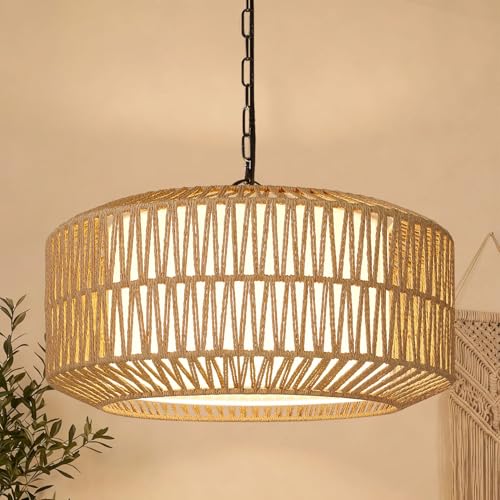
Upgraded 5-Light Farmhouse Chandelier – Two-Layer Rope Design: This hand-woven rattan light fixture combines natural rattan and durable metal for a rustic yet modern boho light fixture. The 20" diameter and 360° light diffusion create a warm, bohemian atmosphere, making it the perfect dining room light fixture or centerpiece for any room.
Choosing the Right Lighting Fixtures
Determining the ideal lighting fixtures for high ceilings involves a thoughtful evaluation of both aesthetics and functionality. It is essential to select proportionate sizes; oversized fixtures can overwhelm while smaller ones may be visually lost. Pendant lights offer height adjustment for added drama, whereas chandeliers act as statement pieces enhancing the room’s grandeur. For a sleek solution, recessed lights provide unobtrusive ambient lighting that highlights architectural features. Incorporating layered lighting strategies—combining ambient, task, and accent fixtures—ensures balanced illumination in high-ceiling areas. Additionally, integrating dimmable lighting options gives versatility for controlling ambiance, adapting to various activities and moods. By thoughtfully choosing lighting fixtures, including options like energy-efficient LED technology, one can transform high spaces into inviting, well-lit environments that reflect personal style.
Recommended Products

【 Industrial Mini Design 】 Please confirm the size before ordering. clear bubble glass shade with matte black finish. Simple line design will make your house look stylish. Great for any kitchen island, foyer or hallway.

Perfect Design: The Industrial gold lantern pendant light has a strong wrought iron and brushed luxury and gorgeous gold look with four candle holders of center, this hanging modern gold lantern chandelier design has a unique luxurious and Industrial vibe, it will be a stunning and amzing home lighting.
Utilizing Architectural Features for Depth
Architectural features serve as powerful tools for enhancing the depth and character of high-ceiling spaces. Incorporating elements such as beams, molding, and crown details can effectively break up soaring heights, creating visual interest. Recessed niches not only accentuate the verticality of a room but also offer surfaces for art or lighting displays. Additionally, vertical strips or paneling draw the eye upward, emphasizing wall height and enhancing the spacious feel. Varying ceiling heights with tray ceilings or coffered designs adds texture and enriches the overall aesthetic. Moreover, strategic placement of pendant lights or chandeliers highlights these architectural features, deftly defining areas within expansive rooms and transforming the ambiance, making these design strategies essential for achieving depth in high spaces. Using adjustable color temperatures in lighting can further enhance the atmosphere, providing a tailored experience for different activities and moods.
Artistic Placement: Focal Points That Draw the Eye
High-ceiling spaces present unique opportunities for artistic expression, where the placement of focal points can greatly enhance the room’s overall aesthetic. Oversized chandeliers or dramatic pendant lights serve as striking focal points that draw the eye upward, amplifying the perception of scale. Large-scale artwork or murals positioned on upper walls can capture attention, further accentuating the ceiling’s height. Vertically oriented decor elements, like tall bookcases or sculptural wall installations, guide the eye along the vertical expanse, highlighting the grandeur of high ceilings. Well-placed mirrors reflect light and create an illusion of intimacy while drawing attention to architectural details. Additionally, contrasting colors or textures on the ceiling and walls create dynamic focal points, enriching the spatial design’s depth and character. Incorporating adjustable height features in lighting fixtures can enhance versatility and maintain balance in scale throughout the room.
Maximizing Natural Light in High Ceilings
How can natural light be maximized in spaces with soaring heights to create a bright, welcoming environment? To enhance natural light, large windows should be prioritized, as they illuminate high-ceiling areas while allowing a warm atmosphere. Adding skylights is also an effective strategy, providing direct sunlight and optimizing airiness, especially with modern UV coatings and built-in blinds for comfort. Incorporating light, sheer curtains can diffuse sunlight without compromising privacy. Additionally, using reflective surfaces, such as mirrors, and light-colored walls amplifies natural light, increasing brightness and reducing reliance on artificial lighting. Strategically placing mirrors throughout the room helps bounce natural light, enhancing overall illumination while making lofty ceilings feel less intimidating and more inviting. Additionally, integrating smart LED lighting can complement natural light by providing customizable ambiance during evening hours.
Implementing Drop Ceilings Strategically
Drop ceilings offer a practical solution for enhancing the aesthetics and functionality of spaces with lofty heights. By effectively concealing piping, wiring, and HVAC components, drop ceilings maintain a clean and organized appearance. To implement them strategically, careful measurement and planning are essential; using tools like laser levels guarantees accurate alignment. Additionally, incorporating sound-absorbing tiles can greatly improve acoustic performance, making high-ceilinged environments more comfortable. While drop ceilings provide easy access to infrastructure, installers must consider varying ceiling heights and existing utilities. Engaging professionals for installation can yield superior results, as experienced installers understand common challenges and adhere to local building codes. Overall, drop ceilings are a must-have for combining aesthetics with practicality in large spaces. Furthermore, using LED accent lighting can enhance the overall ambiance and make the space feel more inviting.
Recommended Products

Top Rated LED 2x2 FT Ceiling Panel with Selectable CCT and Brightness

Top Rated LED 2x4 Selectable CCT Ceiling Panel
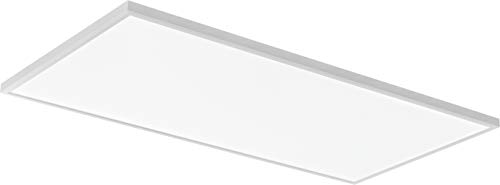
CEILING LIGHTING SOLUTION: The CPANL LED Flat Panel features switchable color temperature providing flexibility for your space; The panel design delivers uniform flicker-free illumination for closet lighting, garage, and kitchen lighting
Alternatives to Drop Ceilings for Aesthetic Appeal
While drop ceilings offer numerous benefits, exploring alternatives for aesthetic appeal can greatly enhance the look and feel of a space. Decorative beams add character, enhancing visual height without the bulk of a drop ceiling. Painted or treated drywall ceilings provide a modern finish with customizable textures and colors. Incorporating skylights or large windows not only illuminates the room but also improves energy efficiency by maximizing natural light. Using tongue-and-groove wood planks introduces warmth and style, offering a stylish rustic or contemporary look. Furthermore, integrating adjustable or ambient LED lighting with these alternatives can boost functionality and aesthetics, ensuring a cohesive design. Combining these elements with ceiling tiles can further create an inviting atmosphere, making spaces feel unique and engaging. The inclusion of fixtures like dimmable lighting can greatly enhance the overall ambiance and usability of high-ceilinged spaces.
Recommended Products

WHY CHOOSE ELYCCUPA: High-cost wicker with high quality cotton + double-sided for total four-layer dense hand weaving = no gaps, no wrinkles, and no visible frames when turn on; Beware: most of the other use low cost fabric with no or artificial cotton, and less than 4 layers hand woven to save costs, looking terrible when lit; Our brass hardware is top-grade, not cheap metal gold here. Quality worth every penny—see the difference!

Height Adjustable Chandelier: The hanging height of this chandelier can be adjusted by changing the number of rods, maximum hanging height is 53.8 inches. This sputnik chandeliers also suitable for sloped ceiling

Three-Layer Lighting: This kitchen pendant light innovatively positions three-layer light strips on its sides, bottom, and curves for 360° surround lighting. It offers vibrant colors for visual expression, becoming a focal point in your space.
Furniture Choices That Complement Height
Selecting furniture that complements high ceilings is essential for creating a harmonious and visually appealing space. Opt for taller pieces, such as shelves or armoires, to naturally draw the eye upward and enhance the sense of scale. Incorporating oversized sofas or striking statement furniture can help fill the vertical space, contributing to an attractive ambiance. Multi-level arrangements, such as nesting tables or tiered shelving, provide visual interest and promote coherence against high ceilings. Choosing colorful or textured upholstery for taller seating can add warmth, breaking up expansive wall space. Additionally, furniture featuring vertical lines or patterns accentuates the height, while strategically placed accent lighting further emphasizes these key elements, elevating the overall design impact within the room.
Recommended Products

【1 Pack Black Pendant Light】This classic pendant lights kitchen island combine matte black metal with clear hammered glass shade. Its timeless style fits modern, mid-century, or farmhouse spaces, and the warm glow is perfect for everyday meals and family gatherings.

【Product Dimensions】Lampshade Dimensions: 6.69"Dia.x4.472"H(17cmx12cm),Adjustable Chain Length: 59"(150cm). Polishing brass accessories are less prone to rusting, durable, anti-oxidation and moisture proof. INCLUDING A Bulb (G45, 6W,2700k). With a rotary switch, need Hardwired. Shenmoyl pendant light has obtained CEC certification.
Creating a Cohesive Design With Vertical Elements
How can vertical elements transform a space with high ceilings into a cohesive design statement? Incorporating tall bookshelves, floor-to-ceiling curtains, or decorative molding emphasizes a room’s height while creating visual unity. Additionally, vertically oriented artwork and oversized wall decor enhance scale, providing dynamism and engagement. Features like column details or elongated pendant lights bridge the floor and ceiling, promoting balanced proportions. Integrating vertical lines through architecture or furniture arrangements effectively counters feelings of emptiness. Moreover, a vertical color scheme, using gradient shades from dark to light, creates an illusion of added height and maintains cohesion. These strategies not only enhance aesthetics but also contribute to energy savings through effective temperature regulation, making them essential design choices for high-ceilinged spaces.
Frequently Asked Questions
How to Give the Illusion of High Ceilings?
To create the illusion of high ceilings, one might utilize visual enhancements such as vertical design elements, strategic lighting, and light color palettes, while incorporating bold patterns or darker tones for a balanced aesthetic effect.
How Do You Push Heat Down From a High Ceiling?
Like a gentle river guiding warmth, effective heat circulation from high ceilings employs reverse ceiling fans, variable speed HVAC systems, strategic diffuser placement, insulation, and radiant heating, ensuring cozy temperatures throughout the space without excessive energy waste.
What Is the Psychology of High Ceilings?
The psychology of high ceilings enhances spatial perception, fostering feelings of openness and creativity. Such environments induce awe, promoting prosocial behaviors and positive moods, ultimately encouraging exploration and risk-taking in individuals who inhabit them.
What to Do With Really High Ceilings?
To effectively utilize really high ceilings, one might incorporate layered lighting, strategic design elements, and natural light sources. These techniques enhance space utilization, creating a balanced atmosphere that feels inviting and visually cohesive.