As an Amazon Associate, we earn from qualifying purchases. Some links on this site are affiliate links at no extra cost to you. Our recommendations are based on thorough research and editorial judgment.

String Lights Outside: Weather Ratings, Spans, and Sag Curves

When installing string lights outdoors, it is essential to understand weather ratings, span lengths, and sag curves. Opt for lights with an IP65 rating or higher for moisture resistance, ensuring durability in various climates. Span lengths should be carefully calculated to prevent sagging, which can be approximately 6-12 inches over 30 feet. Use robust support structures and guide wires to maintain tension. Choosing quality components and practicing regular maintenance enhances overall safety and aesthetic appeal. Further information can enhance your lighting strategy.
Key Takeaways
- Choose outdoor string lights with a waterproof rating of IP65 or higher for optimal moisture resistance and protection against water exposure.
- Span length impacts aesthetics and safety; avoid sagging by calculating the number of lights and length needed for even coverage.
- Monitor sag curves regularly; use guide wires for additional support to prevent excessive drooping of the lights over longer spans.
- Ensure robust support structures, like solid steel poles, are installed at least 24 inches deep to withstand environmental forces effectively.
- Conduct annual inspections and seasonal adjustments for your lights to maintain performance and aesthetics, addressing sagging, wear, and damage proactively.
Understanding Weather Ratings for Outdoor String Lights
You may be interested
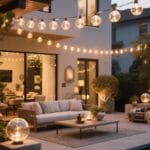
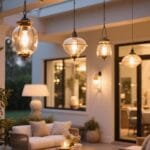

When evaluating outdoor string lights, understanding weather ratings is vital, as these ratings directly influence their suitability for various environments. Weather ratings, particularly the IP65 and IP67 ratings, indicate the resilience of outdoor string lights against water and dust. An IP65 rating means the lights are dust-tight and robust against water jets, while an IP67 rating suggests they can withstand temporary immersion. To enhance durability, look for weatherproofing features, including gasketed sockets and UV-resistant materials. Local climate considerations, such as humidity and temperature fluctuations, further affect longevity. Regular maintenance checks are essential to maintaining the integrity of weatherproof connections, preventing moisture-related issues, and ensuring the outdoor lights continue to illuminate outdoor spaces safely and effectively. Choosing string lights with high weather resistance ratings is crucial for long-term use in outdoor settings.
Recommended Products

【Energy-Saving & Durable】- These 100ft (50ft*2) outdoor lights come with 50+2 (25*2) (2 spares) shatterproof G40 LED bulbs. Using high grade wire, they reduce electricity consumption by over 90% compared to incandescent bulbs, while lasting up to 30,000 hours. Connect max 14 strands to blanket large outdoor spaces in brilliant, year-round illumination

【 55ft LED Connectable String Lights 】- This outdoor light comes with 25+2 G40 LED bulbs. Each bulb is 2 feet apart for a total length of 55 feet. It supports an end-to-end connection of up to 14 strings, allowing you to customize the length you need. These lightweight and convenient patio lights are easy to carry and store

Safer Outdoor String Lights - Whether it's wind, rain, or extreme temperatures, out outdoor string lights for outside can handle it all with ease. Designed with fully silicone-sealed bulbs to ensure safe use no matter the time or place. These patio lights use drop-proof thickened plastic bulbs that are not easily deformed and broken to ensure ultimate safety and peace of mind. You can relax and enjoy the outdoors with your family, knowing our lights are high quality and reliable.
Importance of Choosing the Right Span Length
Selecting the appropriate span length for outdoor string lights is a pivotal aspect of achieving an enchanting and safe illumination effect. A carefully chosen span length minimizes the risk of sagging lights, which can detract from aesthetic appeal and create safety hazards. Using proper installation techniques, including guide wires and sturdy anchors, is vital for maintaining light distribution and counteracting environmental factors like wind load. For instance, a 30-foot span may sag by 6-12 inches without adequate support. Calculating the number of lights needed guarantees that the installation maximizes coverage while preventing excess sag. Ultimately, investing in the right span length not only enhances the visual impact but also improves longevity, reducing future replacement costs associated with sagging issues. Additionally, ensuring that the weather resistance rating of the lights meets strong environmental demands will protect against short circuits caused by moisture.
Recognizing Sag Curves in String Light Installations
Understanding sag curves in string light installations is essential for achieving the desired aesthetic and functionality of outdoor spaces. Improper installations can lead to sagging, often resulting in drops of 6-12 inches over a 30-foot span. To combat this, employing guide wires is important as they provide crucial support and reduce sagging risks. Weather conditions also play a significant role, with temperature changes causing the lights to expand and contract, while wind load can increase tension on the strings by 3-5 times during storms. Regular maintenance checks are necessary to monitor sagging and guarantee proper tension in guide wires, which helps maintain the installation’s integrity and minimizes light replacements due to structural failures. Additionally, selecting lights with weatherproof designs ensures durability and reliability in various outdoor conditions.
The Role of Support Structures in Preventing Sagging
In outdoor string light installations, robust support structures emerge as an integral component to prevent unsightly sagging and maintain operational integrity. These structures, such as solid steel poles, provide the necessary stability to withstand environmental forces. Proper installation is vital; poles should be at least 24 inches deep and secured with concrete to minimize sagging over time. To combat potential performance issues, installing guide wires can greatly enhance support, offering a cost-effective method to reduce sagging that can reach 6-12 inches over 30-foot spans. Without adequate support, both aesthetic concerns and functionality suffer, making robust support structures a must-have in outdoor string light setups to guarantee lasting beauty and performance. Additionally, weather-resistant designs ensure that the lights can withstand harsh conditions, further contributing to their longevity.
Recommended Products
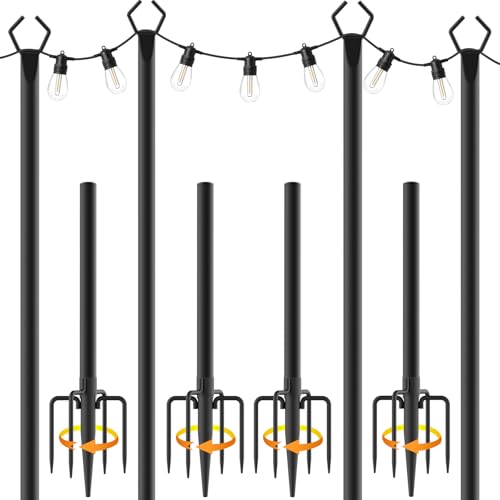
No height restrictions:Made of high quality metal, it will not bend or wobble. The poles for string lights is not limited by its own length, and the excellent load-bearing properties allow you to install it on high fences and walls. Get rid of the general height limitation. You can also hang more number of strings of lights. Also can be applied to banners, lanterns, wind chimes, all kinds of light decoration, etc.

Durable material: Made of high-quality metal, with excellent anti-rust ability, can effectively resist the sun, wind and rain, snow and humidity and other outdoor bad weather, to ensure long-term stable use, without frequent replacement.

No height restrictions:Made of high quality metal, it will not bend or wobble. The poles for string lights is not limited by its own length, and the excellent load-bearing properties allow you to install it on high fences and walls. Get rid of the general height limitation. You can also hang more number of strings of lights. Also can be applied to banners, lanterns, wind chimes, all kinds of light decoration, etc.
Calculating Optimal Spans for Different Outdoor Spaces
Ideal spans for outdoor string lights are fundamental for effective installation, ensuring both visual appeal and structural integrity. For ideal spans, it is essential not to exceed 30 feet without a guide wire system, as sagging typically ranges between 6-12 inches. Considering the average wind load, which can increase tension by 3-5 times during storms, precise calculations are crucial for safe installation. Using solid steel poles instead of hollow aluminum can prevent stress fractures under load, enhancing durability. Regular spacing of support structures is important, especially for longer spans, as it maintains light positioning while reducing sagging. Additionally, planning for a slight downward drop at the midpoint enhances aesthetics and minimizes strain on wires and bulbs. Incorporating weather-resistant features for outdoor lighting also ensures durability against harsh conditions.
Recommended Products
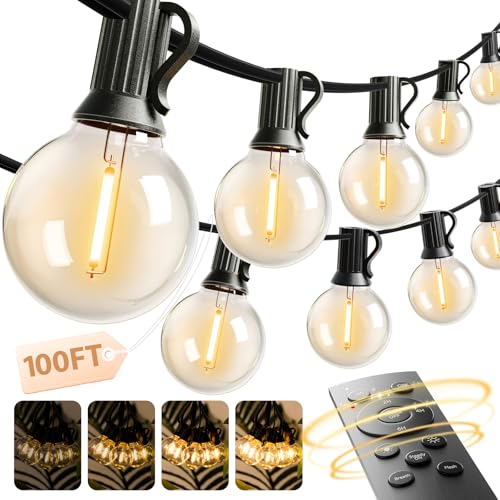
【One Remote, Four Brightness Levels】Sit back and relax while you control your outdoor lights with a simple remote. Tap to switch the brightness between 25%, 50%, 75% and 100%, making it easy to go from a soft, cozy glow to bright lighting for grilling, games or family gatherings.

Breathtaking Italian Bistro Style Lighting : Each strand features 15 vintage-inspired hanging sockets with shatterproof E17 LED edison bulbs, spaced 3.11 feet apart for a captivating, even glow. Enjoy brighter, energy-efficient outdoor lights that enhances every outdoor moment with timeless charm and lower electricity costs.

【Vintage Hanging Light】A plug-in vintage-style hanging light with a modern industrial look. No hardwiring needed — just plug and hang. Ideal for renters, DIY projects, or stylish makeovers without hiring an electrician.
How Weather Conditions Affect String Light Performance
While various factors contribute to the performance of outdoor string lights, weather conditions play a vital role in their functionality and longevity. Temperature fluctuations, for instance, can lead to wire expansion and contraction, ultimately affecting performance. Additionally, string lights designed for outdoor use typically possess higher waterproof ratings, such as IP65 or above, ensuring resistance to moisture. However, heavy winds and storms may cause sagging, resulting in a 6-12 inch drop in a 30-foot span due to increased tension. Moreover, proper installation depth is essential in snowy regions, requiring poles to be at least 24 inches deep to prevent structural failure. Regular maintenance and inspections can help address weather-related wear, ensuring ideal ongoing safety and functionality. It is also important to incorporate lights with high IP ratings to enhance durability in adverse weather conditions.
Tips for Securing Lights to Minimize Sagging
To effectively secure outdoor string lights and minimize sagging, implementing a thorough support strategy is crucial. Utilizing a guide wire system provides primary support, reducing droop by up to 12 inches across a 30-foot span. Installing robust support structures, such as solid steel poles embedded at least 24 inches in concrete, mitigates risks during inclement weather. It is imperative to regularly inspect and adjust the tension on guide wires, especially after seasonal temperature fluctuations. When hanging lights, secure with hooks or clips designed for outdoor use to withstand wind movement. Opt for high-quality string lights featuring durable components, including heavy-duty cords and shatterproof bulbs, to guarantee they resist sagging and damage effectively over time, making for a vibrant and dependable display. Additionally, consider IP65 waterproof ratings for increased durability against the elements.
Recommended Products

ONE LIGHT CLIP FOR EVERY TWO FEET OF LIGHTS: One package of the Command Clear Outdoor Light Clips includes 20 clear hooks and 24 small water-resistant Command Strips; use one light clip for every two feet of lights

Sturdy & Strong:Our durable outdoor hooks are perfect for both indoor and outdoor use. Made with high-quality materials and rustproof coatings, they can hold up to 40 pounds and last for years. The outdoor light hooks are 2.2 x 1 inch, Whether you're hanging plants, lights, or decor, our hooks will securely hold them in place.

Sturdy and Durable: Package include 30 pcs clear adhesive christmas light clips. Base 1.57”x 0.9”, Inner Height 0.2”. The double-hook design and the use of high-quality PA66 materials make our string light hooks sturdy and durable, no worry about light clips for outside string lights falling off.
Selecting Quality Components for Longevity and Safety
Selecting quality components for outdoor string lights is essential not only for aesthetic appeal but also for guaranteeing longevity and safety in various weather conditions. Using durable materials with weatherproof covers rated IP65 or higher will protect against moisture and UV exposure. It’s advisable to choose removable bulbs, particularly LED, as they emit less heat and resist environmental damage, enhancing longevity. Additionally, integrating heavy-duty cords with insulated coatings like SPT2 or SJTW greatly contributes to safety during adverse weather. During installation, securing lights properly and avoiding sharp edges can prevent wiring damage. Regularly inspecting for loose connections further guarantees that outdoor string lights function safely and last longer, making thoughtful component selection a must-have for any outdoor lighting design. Furthermore, choosing lights that are UL-rated for damp locations can significantly enhance their safety and durability when exposed to outdoor elements.
Recommended Products

Commercial Grade and Energy Saving: 75 FT S14 Patio string light with 24+2 pc shatterproof 1 W E26 base bulbs. Brightness equivalent to 11 watt traditional bulbs, brighter and slash electric bills by 90% with our outdoor string lights

For Low-Profile Outdoor Accents: 16.4ft Cool White 5000K strip with 150 LEDs fits patios, steps, deck edges, shelves, coves, counters and trim lines

【Durable Quality, Energy Efficient】 Brightown 75ft outdoor string lights, with commercial-grade wire and 22+2 shatterproof weatherproof LED bulbs (2 spares), reduce electricity consumption by over 90% compared to incandescent bulbs. These patio lights can be linked up to 32 strings to brightly illuminate large areas year-round, and the long-lasting bulbs ensure extended use
Maintenance Practices for Prolonging String Light Lifespan
Maintaining outdoor string lights effectively is essential for maximizing their lifespan and ensuring consistent performance throughout the seasons. Regular inspections, at least annually, are important to check for sagging, damage, or wear that can prolong lifespan. Cleaning the light fixtures and connection points quarterly prevents debris buildup, promoting ideal functionality and consistent light output. Seasonal adjustments regarding securing or removing lights ahead of harsh weather conditions are critical for reducing stress on the installation. Establishing a maintenance calendar can serve as a reminder for these inspections, allowing homeowners to catch potential issues early. Photographs of connection points aid in future troubleshooting and maintenance. Implementing these practices will greatly enhance the longevity of outdoor string lighting systems. Additionally, understanding the waterproof design of solar string lights can provide valuable insight into their durability against the elements.
Enhancing Aesthetic Appeal While Managing Sag Curves
Achieving a visually appealing outdoor lighting arrangement while addressing sagging issues requires careful consideration of installation techniques and materials. Utilizing guide wire systems is a must-have for greatly reducing sagging in spans of 30 feet, which can otherwise droop by 6-12 inches. Adapting to weather conditions, particularly wind loads, increases the tension on lights and necessitates robust support structures. Investing in quality components, such as solid steel poles, enhances stability and aesthetics. To maintain the desired aesthetic ambiance, establishing a maintenance schedule for regular inspections and adjustments is essential. This proactive approach addresses sagging promptly, preserving the overall visual charm of outdoor lighting displays while providing enduring allure and functionality to various outdoor spaces. Additionally, choosing fixtures that provide energy-efficient lighting can enhance the visual appeal while reducing electricity costs.
Frequently Asked Questions
How Far Can You Span String Lights?
For ideal string light installation, spanning 25-30 feet guarantees overhead clearance while maintaining light durability. Effective hanging techniques and strategic placement, considering weight distribution and seasonal adjustments, enhance decorative styles without compromising voltage requirements.
What Is the Weather Rating for Outdoor Lights?
Outdoor lights should feature weatherproof materials, UV resistance, and moisture protection. They require temperature tolerance, wind resistance, and adherence to installation tips. Maintenance guidelines improve cable durability, energy efficiency, and light intensity for lasting performance.
What Are the Best String Lights for Outside?
The best outdoor string lights enhance festive ambiance with energy efficiency, utilizing LED bulbs. Installation tips include creative layouts while maintenance guides guarantee longevity. Design styles vary, but safety precautions are essential for ideal use.
What Is the Rule of Thumb for Outdoor Lighting?
While some may overlook details, the rule of thumb for outdoor lighting includes considering installation tips, safety, energy efficiency, and design styles to enhance outdoor ambiance, ensuring ideal mood lighting and seasonal usage, with proper maintenance practices.