As an Amazon Associate, we earn from qualifying purchases. Some links on this site are affiliate links at no extra cost to you. Our recommendations are based on thorough research and editorial judgment.

Kitchen Lighting: Islands, Undercabinet, and Task Hotspots

Effective kitchen lighting is essential for improving functionality and safety in key areas like islands, under-cabinet spaces, and task hotspots. Task lighting should focus on countertops and islands with adequate fixtures, such as pendant lights placed 30-36 inches above surfaces. Under-cabinet lighting, installed 2-4 inches above counters, eliminates shadows for clearer visibility. Choosing the right color temperature can enhance ambiance and aid in food preparation. For more insights on optimizing kitchen lighting design, further exploration is recommended.
Key Takeaways
- Task lighting above kitchen islands should be bright, allowing for effective food preparation and cooking without shadows.
- Under-cabinet lighting is essential for illuminating countertops, ensuring safety and accuracy during meal prep.
- Pendant lights above islands should hang 30-36 inches high, providing focused task lighting while enhancing kitchen aesthetics.
- Ensure the color temperature for islands is cooler for tasks and warmer near dining areas for a cozy atmosphere.
- A light layout that considers the work triangle enhances efficiency and ensures equal light distribution across all hotspots.
Understanding the Importance of Kitchen Lighting
You may be interested
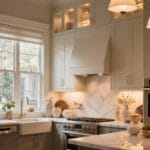
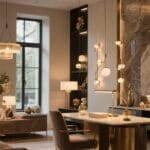
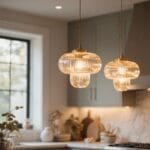
Effective kitchen lighting is an important component of both functionality and safety in the culinary space. Proper kitchen lighting not only provides necessary task lighting for food preparation but also enhances overall illumination to prevent accidents caused by poor visibility. Essential lighting types include ambient lighting, like pendant lights over kitchen islands, and under-cabinet lighting that guarantees work surfaces are bright and accessible. Color temperature matters too; warm light can create a cozy atmosphere, while cooler light boosts task visibility. Additionally, energy-efficient lighting options help save on electricity costs. Regular maintenance, such as cleaning fixtures and replacing burnt-out bulbs, is vital for maintaining consistent brightness and safety, allowing kitchen spaces to thrive aesthetically and functionally. Incorporating dimmable lighting options can further enhance flexibility in adjusting brightness according to specific cooking tasks or preferences.
Types of Kitchen Lighting: Task, Ambient, and Accent
While many may overlook the role of lighting in a kitchen, understanding the types of kitchen lighting—task, ambient, and accent—can transform both the functionality and aesthetics of this key space. Task lighting, such as LED lights positioned above countertops and kitchen islands, focuses on ideal illumination for activities like food preparation. Ambient lighting, created using recessed lights or central fixtures, provides general illumination to eliminate dark spots and enhance comfort. Accent lighting, meanwhile, elevates the overall aesthetic by highlighting features like cabinetry displays or backsplash areas. It is essential to select appropriate color temperatures, with warmer tones for ambient lighting and cooler tones for task lighting, ensuring both an inviting atmosphere and efficient functionality in your kitchen. Incorporating energy-efficient designs can significantly reduce utility costs while enhancing the overall lighting experience.
Recommended Products
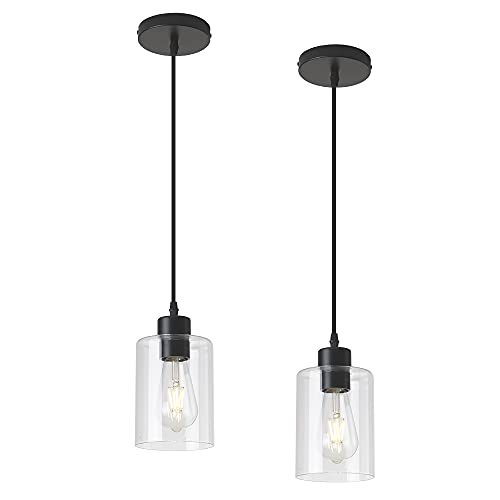
Note sold by KLSS is original design◆DIMMABLE AND WORKS WITH MOST BULBS - Fully dimmable when used with a dimmable bulb and compatible dimmer switch. Uses medium base bulbs including LED, CFL, Halogen and Edison bulbs, compatible with most smart bulbs

【Product Dimensions】Each lamp: 6.69"Dia. x 4.47"H (17x12cm) shade, adjustable 59"(150cm) chain. Polished brass finish resists rust. Includes 2 x G45 6W LED bulbs (2700k warm glow). Hardwired with rotary switches. UL certified for safety assurance.
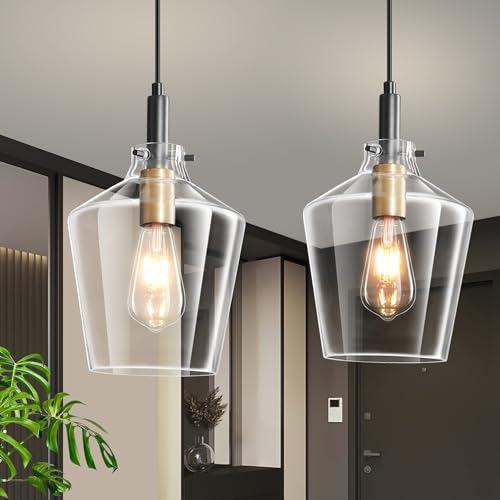
【2 Pack & E26 Bulb 】Modern pendant light can use any E26 standard base bulbs (100W Max). The light itself is not dimmable, but it is fully dimmable when used with a dimmable bulb and compatible dimmer switch (Bulb and Dimmer Switch Not Included)
Selecting the Right Fixtures for Your Kitchen
How can the right fixtures greatly elevate a kitchen’s functionality and charm? Selecting energy-efficient LED fixtures can reduce energy consumption noticeably while enhancing illumination quality. For a kitchen island, pendant lights should complement the overall décor, ensuring adequate lighting over this essential workspace. Under-cabinet lighting is a must-have; it effectively illuminates countertops, eliminating shadows for focused task lighting during food preparation. When considering bulbs, pay attention to color temperature; warmer lights (2700K-3000K) create ambiance, while cooler lights (4000K-5000K) are preferable for task areas. Additionally, integrating dimmable options allows flexible lighting levels to suit various activities and moods throughout the day, making smart lighting design an integral component of any functional kitchen. Choosing energy-efficient LED bulbs can further enhance adaptability and long-term cost savings.
Recommended Products

【1 Pack Black Pendant Light】This classic pendant lights kitchen island combine matte black metal with clear hammered glass shade. Its timeless style fits modern, mid-century, or farmhouse spaces, and the warm glow is perfect for everyday meals and family gatherings.

Downrod Stiff Poles for brushed nickel pendant light - this modern pendant light come with threaded straight rods in multiple lengths.And tilting swivel canopy for flat, vaulted or sloped ceilings up to 54" high.

[Industrial & Retro Design]--3 pack pendant lights features a retro-style dome shade in a two-tone finish (matte black and gold), a design that creates a stark contrast.The outer paint is not easy to fall off and easy to clean.
Strategic Placement and Layout Planning
Strategically placing lighting fixtures in the kitchen transforms both functionality and aesthetics, guaranteeing ideal illumination wherever it’s needed. Under-cabinet lighting is essential for illuminating critical task areas, with fixtures ideally installed 2-4 inches above countertops for maximum coverage. Consider the layout in relation to the work triangle, consisting of the sink, stove, and refrigerator, to enhance visibility. Recess lights should be centered over countertops and kitchen islands, spaced 24-30 inches apart to prevent shadowing. Pendant lights hung 30-36 inches above kitchen islands not only provide adequate task lighting but also serve as attractive design elements. Finally, account for any obstructions to guarantee even distribution of light throughout the kitchen for a well-lit and inviting space. Incorporating features such as motion sensor technology enhances convenience by allowing lights to activate automatically as needed.
Recommended Products

[Trending Design] This hanging light fixture by EMAK adds charm to any space, the durable metal with black gold finish adds an elegant and luxurious touch to your house, we wish it would be more than a hanging light but also an art decor.

【 Industrial Mini Design 】 Please confirm the size before ordering. clear bubble glass shade with matte black finish. Simple line design will make your house look stylish. Great for any kitchen island, foyer or hallway.
The Impact of Color Temperature and Light Quality
The quality of light and its color temperature play pivotal roles in establishing a kitchen’s functionality and mood. Warm white lights, ranging from 2700K to 3000K, create a cozy atmosphere for dining. Conversely, cooler light, between 4000K and 5000K, is ideal for task areas requiring bright illumination. Utilizing quality LED lights guarantees a flicker-free experience and promotes excellent color rendering, essential for food presentation. With a Color Rendering Index (CRI) value of 90 or above, the accurate representation of colors enhances culinary aesthetics. Combining different color temperatures adds visual depth, allowing for cooler tones in task areas and warmer shades in ambient lighting. Understanding these factors greatly influences kitchen functionality, comfort while cooking, and overall entertaining experiences. Moreover, incorporating energy-efficient LED bulbs can significantly reduce energy costs while maintaining optimal lighting quality throughout the kitchen.
Recommended Products

[Modern Diamond-cut Crystal Globe Pendant Light] Xbuyee pendant lights kitchen island has an unique design with chrome finish and diamond-cut crystal acrylic, brings out charming and starry light effect, perfect for kitchen island, dining room, living room, restaurant, bedroom, dinner room, balcony, hallway, bar etc.

5CCT Pendant Light:5-Color LED indoor ceiling can switch between 2700K(Soft White),3000K(Warm White),3500K(Neutral White),4000K(Cool White),5000K(Daylight),You Can Feel free to Switch The Desired Lighting Effect According to Different needs.

5CCT Pendant Light:5-Color LED indoor ceiling can switch between 2700K(Soft White),3000K(Warm White),3500K(Neutral White),4000K(Cool White),5000K(Daylight),You Can Feel free to Switch The Desired Lighting Effect According to Different needs.
Energy Efficiency and Automation in Kitchen Lighting
As kitchen design trends evolve, energy efficiency and automation in lighting have surged to the forefront of modern culinary spaces. Implementing LED lights dramatically reduces energy consumption by 75% or more, lowering electricity bills and minimizing bulb replacements. Energy Star rated fixtures are essential for maintaining energy efficiency, often yielding additional rebates for homeowners. Automation through dimmer switches allows control of diverse lighting layers, tailoring brightness for different tasks and times. Smart home integration further enhances this experience, enabling remote control via smartphones or voice commands. Additionally, incorporating motion sensors guarantees that undercabinet lighting activates only when necessary, preventing wasted energy. A well-planned lighting strategy can transform a kitchen into a functional, efficient space while supporting sustainable living. Moreover, solar-powered options can also be utilized to illuminate outdoor kitchen areas, further enhancing energy savings.
Recommended Products

Warm White and Daylight White : Dimmable Under Cabinet Lights Plug-in LED Strip Lights for kitchen, 6 PCS pre-cut LED lights strip. White cabinet light Suitable for DIY your kitchen, cabinet, closet, counter, shelf, TV back, showcase and anywhere you want
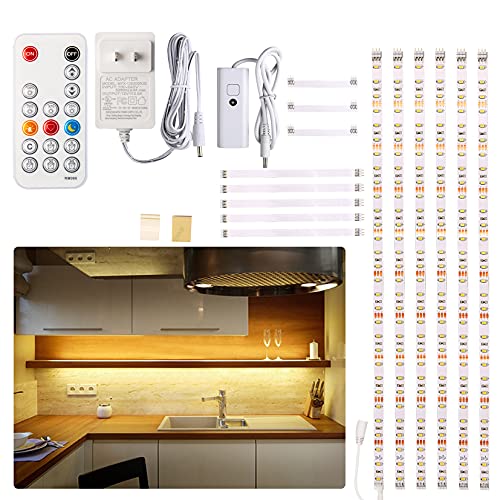
DIY LED light strip: 6 PCS pre-cut strips, total 9.8 ft,many kinds of connection option,Great way to upgrade your cabinets,closet,desk,bookshelf,bed,wardrobe,display case,bedroom,workbench etc

3 Color Temperature(CCT) Settable LED under cabinet lighting: You can select a Warm white (3000k), Neutral Bright White (4000K), Daylight (5000K) under cabinet lights. And with an On/Off Switch on the Plug in Cable to control all linked configuration
Frequently Asked Questions
What Is the Kitchen Island Lighting Trend 2026?
In 2026, kitchen island lighting embraces smart technology with sculptural pendant lights, minimalist design, and adjustable fixtures. Energy-efficient solutions utilizing sustainable materials, warm color temperatures, and layered ambient lighting create a harmonious, task-oriented culinary environment.
What Is Replacing the Kitchen Island in 2026?
In 2026, kitchen islands are replaced by minimalist counters and movable islands, featuring integrated seating, smart appliances, and modular storage. Emphasizing ergonomic furniture and biophilic design, these multifunctional spaces thrive in open layouts with sustainable materials.
What Is the Best Under Cabinet Lighting for Kitchens?
The ultimate under-cabinet lighting revolution includes LED strip lights, puck lights, and light bars with dimmable options. Prioritize energy efficiency and color temperature, and consider motion sensors and wireless solutions for effortless installation and accent lighting.
What Is the Trend for Kitchen Island Lighting?
Current trends in kitchen island lighting feature modern designs, oversized pendant styles as statement pieces, and adjustable fixtures. Emphasizing energy efficiency and minimalist aesthetics, they often incorporate layering lighting, mixed materials, and vintage inspirations alongside smart technology.