As an Amazon Associate, we earn from qualifying purchases. Some links on this site are affiliate links at no extra cost to you. Our recommendations are based on thorough research and editorial judgment.

Task Lighting Over Counters and Workbenches: Brightness Targets

Task lighting over counters and workbenches is essential for achieving ideal brightness. For general tasks, aim for 500 to 1,000 lumens, ensuring effective visibility and reduced glare. Precision activities, like sewing, require 1,000 to 1,500 lumens for accuracy. Choose LED under-cabinet lights, adjustable desk lamps, or pendant lights based on your workspace. Position fixtures to avoid shadows, and consider dimmable options for flexible lighting. By understanding these principles, one can create a well-lit and efficient workspace. More insights await.
Key Takeaways
- Task lighting over counters should provide 500 to 1,000 lumens for effective food preparation and visibility.
- Workbenches require 1,000 to 1,500 lumens for precision tasks like sewing and intricate work.
- For reading, a brightness level of around 500 lumens is recommended to ensure clarity and reduce eye strain.
- Use adjustable fixtures positioned at eye level to minimize shadows while ensuring even light distribution.
- Incorporate multiple light sources and consider dimmable options to enhance flexibility and reduce harsh shadows.
Understanding the Importance of Task Lighting
You may be interested



Effective task lighting is vital for any workspace, especially over counters and workbenches, where clarity and focus are paramount. Properly designed task lighting should feature adjustable fixtures that allow users to direct illumination precisely on detailed tasks, enhancing ideal visibility. With appropriate brightness levels of 500-1000 lumens, this lighting guarantees that work areas are well-lit, helping to reduce eye strain and improve safety. The position of task lighting plays an important role; it should minimize shadows and glare, providing even light across surfaces. Incorporating energy-efficient LED bulbs not only enhances light quality but also contributes to lower energy consumption, making task lighting a key element for productivity in any workspace dedicated to intricate activities. Additionally, selecting under cabinet lights with dimmable options allows for greater flexibility and customization in brightness levels, catering to specific task requirements.
Recommended Brightness Levels for Different Tasks
Adequate brightness levels play a significant role in enhancing productivity and comfort across various tasks. For activities like reading, a brightness of approximately 500 lumens is essential for clear visibility and reduced eye strain. Kitchen work surfaces, such as counters, should ideally receive 500 to 1,000 lumens to provide proper lighting for food preparation and cooking. Precision tasks, including sewing and crafting, benefit from higher illumination levels ranging from 1,000 to 1,500 lumens, enhancing detail visibility. For more recreational activities, like puzzles and board games, 500 to 1,000 lumens promote adequate visibility without causing discomfort. Finally, when using a computer, lower brightness of 100 to 200 lumens can help reduce glare while maintaining focus and comfort. Additionally, energy-efficient lighting options, such as LED bulbs, can be utilized to create a more sustainable workspace.
Recommended Products

【Farmhouse Dining Room Light Fixture】 The vintage 5-light pendant lighting fixtures are specially designed for kitchen island and dining table, the perfect combination of rust-proof brass gold metal and clear glass shade, presenting a warm and comfortable dining atmosphere

Perfect Design:This 2 packs black pendant lighting for kitchen island combines both vintage and industrial styles. This pendant light fixtures are perfect for front warehouses, hallways, dining rooms, kitchen islands, worktops, stairwells, restaurants, etc

💡【Unique Modern Style】This pendant light fixture features a unique black gradient glass shade and aluminum base with a matte black finish. The black gradient glass lampshade can soften the light and provide comfortable and natural light that helps reduce eye strain and protect your eyes. With a minimalist yet stylish look that adds a more modern atmosphere to your room, this black pendant light will catch everyone's attention whether it's turned on or off.
Types of Light Fixtures for Task Lighting
When selecting types of light fixtures for task lighting, it is crucial to take into account both functionality and aesthetics to create an efficient workspace. LED under-cabinet lighting serves as a popular choice, offering focused illumination and energy-efficient illumination for counter surfaces. Adjustable lights, such as desk lamps, are excellent for workbenches, enabling users to direct light precisely where needed, helping to reduce shadows. Pendant lights provide both concentrated lighting and visual interest above counters or islands, making them a stylish option. Additionally, wall-mounted fixtures can illuminate specific tasks without taking up counter space. Keeping brightness targets between 500 to 1,000 lumens guarantees adequate light for various activities in work areas, enhancing productivity and effectiveness. Incorporating features such as motion sensors can further increase the convenience and energy efficiency of task lighting setups.
Recommended Products

Modern Minimalist Design in Brushed Nickel: Featuring a clean cylindrical silhouette and a premium brushed nickel finish, this pendant light adds a touch of refined elegance to kitchens, dining areas, bars, and loft-style interiors. A perfect fit for modern, Scandinavian, or industrial décor

DOTCN 17.8" all-black pendant light features a clean, minimalist matte black dome – no extra trim, no distractions. Pure industrial design that works beautifully in industrial, Nordic, modern, contemporary, and farmhouse interiors. Simple, bold, and timeless.

Compact Design: At 8 inches wide, this pendant light is perfect for adding a stylish touch to smaller spaces or for hanging in multiples to create a cohesive and well-lit look.
Benefits of Proper Task Lighting
Proper task lighting over counters and workbenches not only enhances visibility but also plays a critical role in executing detailed tasks effectively. The recommended brightness levels, ranging between 500 to 1000 lumens, guarantee work surfaces are well-illuminated, enabling users to perform activities like cooking or crafting without strain. By considerably reducing glare and shadows, task lighting minimizes errors during intricate tasks. Adjustable task lighting allows individuals to customize brightness and direction, making work areas safer and more efficient. This adaptability not only improves productivity but also illuminates potential hazards present on counters and workbenches. Ultimately, effective task lighting enhances visibility and reduces eye strain, transforming spaces into functional environments conducive to focused work. Additionally, energy-efficient models can lead to long-term savings in energy consumption, making them a smart choice for frequent use.
Where to Install Task Lighting in Your Home
Effective task lighting is essential in maximizing functionality throughout a home, as it greatly enhances both safety and productivity. In kitchens, installing under-cabinet lights achieves brightness targets of 500-1000 lumens, ensuring efficient food preparation. In a home office, desk lamps positioned at eye level can provide around 500 lumens, improving visibility for paperwork and computer work. For garages or workshops, adjustable fixtures such as clamp-on lights should be mounted above work surfaces to minimize shadows. Bathroom vanity lights should flank mirrors, offering 500 lumens for better grooming visibility. Additionally, pendant lights above dining tables or kitchen islands should be hung 30-36 inches high, delivering focused illumination while creating a cozy atmosphere. Effective lighting design transforms these spaces, enhancing daily tasks. Incorporating IC rated recessed lighting can further improve energy efficiency and safety in task lighting applications.
Adjusting Light Color Temperature for Optimal Task Performance
Illumination quality over counters and workbenches extends beyond mere brightness; it encompasses the color temperature that influences task performance. Ideal task lighting typically ranges from 4000K to 6000K, mimicking daylight, which greatly enhances visibility for detailed tasks. When adjusting the color temperature, cooler tones between 5000K and 6000K increase alertness and concentration, making them ideal for intricate work such as crafting or sewing. Conversely, warmer tones, about 3000K to 4000K, can create a cozy atmosphere but may compromise visibility during precision tasks. Utilizing lighting fixtures with adjustable color temperatures allows users to tailor illumination settings to their specific needs, enhancing performance for both productivity and comfort. Additionally, energy-efficient LED lamps prioritize functionality while minimizing electricity consumption, ensuring a sustainable workspace. Prioritizing these adjustments guarantees an efficient workspace.
Recommended Products

【Specifications】Dimensions: 39"L x 2.1"W x 2.1"H (99cm x 5.5cm x 5.5cm) | Color Temperature: 3000K/4000K/6500K Adjustable | CRI≥85 | Voltage: 100-240V | Lifespan: Approx. 50,000 hours | Finish: Black Baked Paint

3 Color Temperature:This modern pendant lights kitchen island features 3 adjustable color temperatures (3000K warm white/4500K neutral white/6500K cool white) to suit cooking, dining, or prep tasks. you can cycle through modes via wall switch—defaults to 6000K cool white on power-up. Due to the lack of a memory function, it cannot retain previous settings. What’s more, it provides even, softer light dispersion that protects your eyes.Please note: Hanging pendant light does not support dimming and is not compatible with dimmer switchespendant lights kitchen island
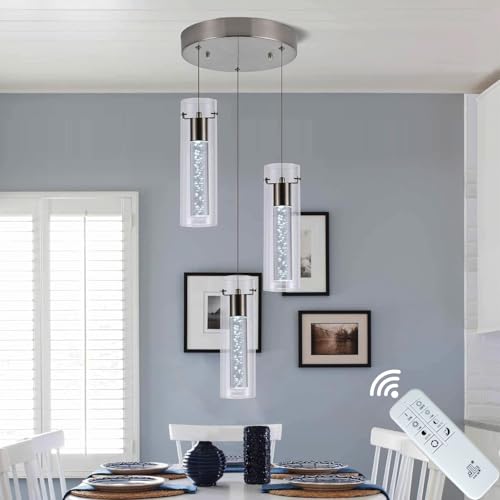
【Customizable Brightness & Color Temperature for Every Mood】 Create the perfect ambiance for any moment with these dimmable pendant lights for kitchen island, offering seamless adjustment from warm white (3000K) for cozy evenings to cool daylight (6000K) for focused tasks. Control brightness levels (10%-100%) and color temperature via the included remote, ideal for kitchens requiring bright meal prep lighting, bedrooms needing soft relaxation glow, or home offices demanding crisp illumination. With 2160LM output at just 24W – perfect kitchen island lighting for spaces up to 150 sq ft
Positioning Task Lighting for Maximum Effectiveness
Positioning task lighting strategically can greatly enhance productivity and comfort in workspaces. To minimize shadows cast by hands or tools, position the lighting at an angle that provides clear visibility on work surfaces. Lights should ideally be installed at eye level or slightly above to prevent glare while maximizing illumination. Utilizing adjustable fixtures allows users to direct illumination precisely where needed, facilitating accuracy in detailed tasks. Incorporating multiple light sources, such as overhead lights and under-counter fixtures, guarantees an even distribution of brightness and eliminates dark spots, enhancing overall visibility. For peak effectiveness, select fixtures that provide brightness levels ranging from 500 to 1,000 lumens, especially for kitchen counters and workbenches, considerably boosting focus and productivity. Utilizing LED options ensures energy efficiency and longevity, making them a practical choice for consistent task lighting.
Utilizing Layered Lighting Solutions
How can a workspace truly benefit from a thoughtfully crafted layered lighting solution? By combining ambient lighting, task lighting options, and focused lighting, individuals can guarantee thorough illumination tailored to their needs. Opting for adjustable fixtures, such as pendant lights or under-cabinet lights, allows light to be directed precisely where it is needed most. For ideal brightness and color, a cooler light in the range of 4000K to 5000K can enhance alertness and support detailed work. It is important to factor in workspace size, as larger areas may require multiple light sources to effectively eliminate shadows and provide even brightness. Additionally, considering lumen output when selecting fixtures ensures that the workspace receives adequate task lighting. Implementing these layered lighting solutions creates an efficient and inviting workspace, promoting productivity and comfort.
Recommended Products

[Modern Diamond-cut Crystal Globe Pendant Light] Xbuyee pendant lights kitchen island has an unique design with chrome finish and diamond-cut crystal acrylic, brings out charming and starry light effect, perfect for kitchen island, dining room, living room, restaurant, bedroom, dinner room, balcony, hallway, bar etc.
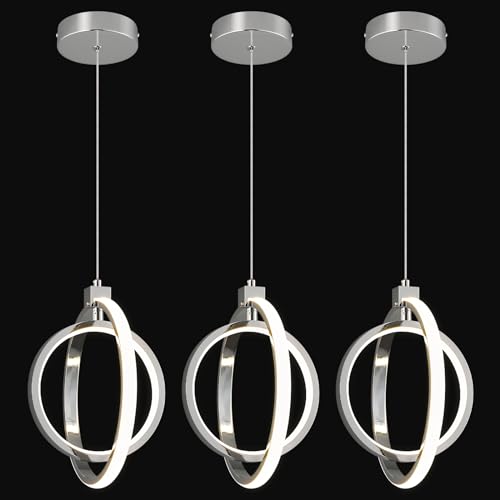
【Modern 2 Rings Chandelier】Modern led pendant light with unique 2-ring interlocking design,The modern style is suitable for your room and will add more unique and stylish elements to your home

Modern Fashion Design: This gold modern LED pendant light is designed with a unique spiral structure, combined with a gold luster, presenting a minimalist aesthetic that blends perfectly into modern design styles.The kitchen island hanging light measures 15 inches (L) x 5.5 inches (W) x 5.5 inches (H), has a power of 22W, and operates on a 110V voltage
Enhancing Aesthetic Appeal With Task Lighting
Task lighting serves more than just a functional purpose; it can greatly enhance the aesthetic appeal of any workspace. By employing under-cabinet task lighting, homeowners can elevate the visual appeal of kitchen countertops while providing effective illumination for food preparation. Pendant lights above workbenches not only deliver focused lighting but also introduce stylish design elements, enriching the overall ambiance. Utilizing LED fixtures adds a modern flair and energy efficiency, making them a must-have for contemporary spaces. Dimmable options offer adjustable lighting, ensuring flexibility that creates a warm atmosphere for gatherings or a bright workspace for detailed tasks. Thoughtfully selecting colors and shapes aligned with existing decor further amplifies the cohesive design, achieving a harmonious look throughout the home. Additionally, incorporating adjustable brightness features in task lighting can enhance both functionality and ambiance in any room.
Common Mistakes to Avoid When Choosing Task Lighting
Selecting the right task lighting for work areas requires careful consideration to avoid common pitfalls that may diminish functionality and design appeal. A frequent mistake is choosing insufficient brightness; ensuring task lighting delivers 500-1000 lumens is essential to enhance visibility and reduce strain. Additionally, failing to adjust light positioning can cast shadows over work surfaces, obstructing direct light on tasks. Opting for decorative fixtures rather than lights designed for focused illumination compromises efficiency. Ignoring dimmable options can result in glare, while incorporating multiple fixtures helps achieve a well-lit workspace by preventing harsh shadows. By addressing these common mistakes, individuals can meet brightness targets and create an effective, visually appealing work environment. Additionally, choosing energy-efficient features in task lighting can further improve overall performance and reduce electricity costs.
Recommended Products

Specification : Size:0.55x 1.81inch, color:6000k daylight white, lumen:200lm, voltage: 120V, wattage: 2w. Set of 5pcs t4 g9 low wattage led bulbs. Please check your original bulb's base before purchase. Life time of up to 25000 hours.This T4 G9 low wattage bulb is mainly used in a place that requires low brightness, and a cool white light is emitted in the form of 6000K to provide a cool atmosphere

★【𝐁𝐫𝐢𝐠𝐡𝐭 𝐔𝐧𝐝𝐞𝐫 𝐂𝐚𝐛𝐢𝐧𝐞𝐭 𝐋𝐢𝐠𝐡𝐭𝐢𝐧𝐠 𝐁𝐚𝐫𝐬】The whole set of cabinet light is 903lumens(Pack of 3 pieces) , soft white daylight 2700K, can illuminate any vignette-ting angle, No glare, no LED dots, no flicker; It is the perfect lighting for kitchen counter cabinet, closet, sink, bookcase, TV cabinet, shelf and so on.

💡Wonderful Under-counter Light Fixtures -- Works great with natural bright color, each light bar has 33 LEDs, covering a wide range. The natural light color is pleasant and comfortable. Great compact light that allows a lot of possibilities.
Future Trends in Task Lighting Design
The future of task lighting design is evolving rapidly, driven by technological advancements and shifting consumer preferences. Designers are increasingly integrating smart technology, allowing users to adjust brightness and color temperature through mobile apps or voice commands. This trend promotes enhanced customization for various workspace environments. Energy-efficient LED technology remains at the forefront, providing brighter illumination while minimizing energy consumption and extending fixture lifespans. Innovative designs focus on glare reduction, improving visibility without sacrificing comfort during detailed tasks. Additionally, there is a growing emphasis on sustainable materials, leading to eco-friendly manufacturing processes and recyclable components, ensuring that task lighting not only meets functional needs but also aligns with environmental values. These trends prioritize both functionality and aesthetic appeal.
Frequently Asked Questions
What Should Task Lighting Be?
Task lighting should optimize brightness levels of 500-1,500 lumens, utilize a light color mimicking daylight, guarantee proper fixture placement for shadow control, promote user comfort, and offer adjustment options for glare reduction and energy efficiency, enhancing work productivity.
How Many Lux Should You Have for Task Visual Inspection?
In a vibrant workshop, task visual inspection thrives under at least 300 lux. Adhering to inspection standards enriches lighting requirements, promoting visual clarity and color accuracy, while minimizing eye strain and enhancing task efficiency amidst ambient lighting.
How Many Lumens for Task Lighting?
For effective task lighting, ideal brightness ranges from 500 to 1,500 lumens. Fixture placement, light color, and energy efficiency—especially with LED options—enhance eye comfort and glare reduction within diverse workspace layouts, maximizing functionality.
What Is the Best Practice for Balancing the Brightness Difference Between the Screen and Task Lighting?
Balancing screen brightness with task lighting enhances visual comfort and productivity. Utilizing adjustable LED fixtures, matching lighting color, and reducing glare through ideal positioning fosters contrast improvement and workspace ergonomics, ensuring efficient and comfortable work environments.